A double chin is not always associated with excess weight. It can appear even in a slim person due to anatomical features, the distribution of subcutaneous fat, age-related skin changes, or swelling. That is why there is no universal exercise or single procedure that works equally well for everyone.
If you are looking for ways to get rid of a double chin, the first step is to determine what exactly is creating the additional volume: a local accumulation of fat, swelling, loss of skin firmness, pronounced ptosis, or a combination of several of these factors.
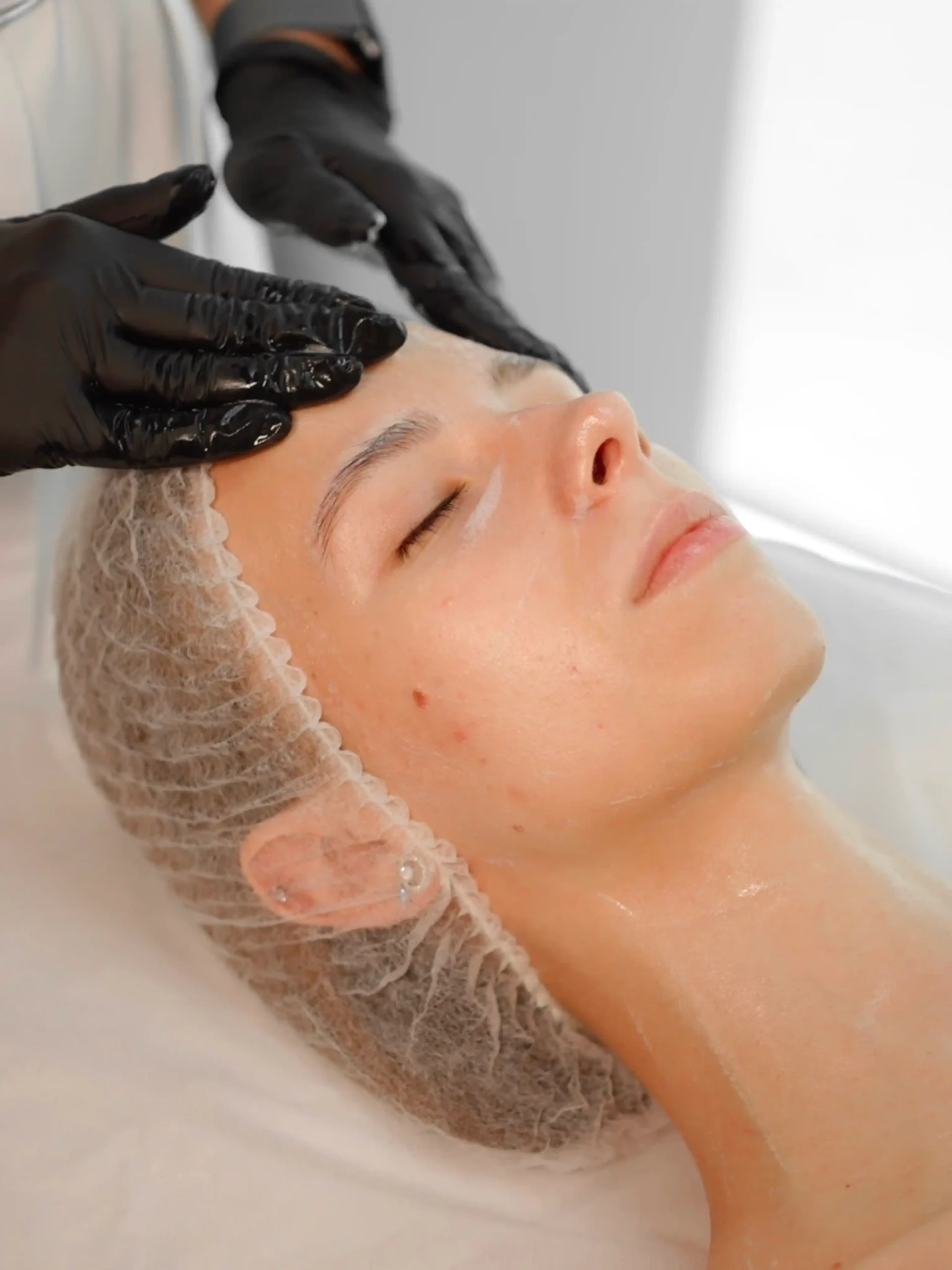
Massage can be a useful part of your care routine: it can support microcirculation and help with swelling and tissue tone. However, it is important to assess its capabilities realistically. Massage does not destroy local fat deposits and cannot independently eliminate pronounced skin sagging. In such cases, device-based and injectable cosmetology offer more options.
Why does a double chin appear?
The area under the chin consists of more than just skin and fat. It also contains muscles, fascia, blood vessels, lymphatic structures, and other anatomical formations. Therefore, a problem that looks similar in two people may have different causes. The anatomy of the submental area is described in detail in the NCBI medical database.
The most common causes include:
- genetically determined fat distribution, as a small fat pad under the chin can be present even at a normal body weight;
- weight changes, since an increase in subcutaneous fat can make the submental area more pronounced;
- age-related loss of skin firmness, when gradual changes in collagen and elastin affect the definition of the lower third of the face;
- significant or rapid weight loss: tissue volume decreases, but the skin does not always contract at the same rate;
- anatomical features of the lower jaw and chin, which also influence how defined the profile appears;
- swelling — fluid retention can temporarily increase the volume of the lower part of the face.
There is also an important boundary between cosmetology and medicine. If swelling under the chin appears suddenly, is asymmetrical, painful, grows rapidly, or resembles a separate lump, it should not be treated as an ordinary “double chin.” The submental area contains lymph nodes, and swelling may have different causes, so a medical consultation is required first.
Can you get rid of a double chin without surgery?

In many cases, it is possible to reduce its appearance without surgical intervention. However, the method depends on the cause.
If swelling is the main issue, massage and lymphatic drainage techniques may be appropriate. If the skin has lost firmness, a cosmetologist may consider RF lifting or focused ultrasound. If the main factor is localized fatty tissue, methods that act specifically on it are needed, such as certain injectable products when indicated.
In other words, the question “how to get rid of a double chin quickly” is better reframed as “what exactly needs to be corrected in my case?” This makes it much easier to choose both the right procedure and a realistic timeframe for results.
Effective ways to address a double chin
Home and professional methods should not be seen as opposites. They simply serve different purposes. Daily care helps maintain the condition of the skin, while professional procedures make it possible to work with deeper structures or localized fatty tissue.
Massage
Face and neck massage may be appropriate if a less defined contour is partly related to swelling and the skin and soft tissues need regular support.
Depending on the goal, classical, myofascial, sculpting, and lymphatic drainage techniques may be used. Massage affects soft tissues and microcirculation and can temporarily change the appearance of the area by influencing fluid movement. For example, a small study of facial rollers showed increased skin blood flow after a short massage.
However, there is an important point: massage should not be presented as a method for locally “burning” subcutaneous fat. There is no evidence that would allow its effects to be equated with methods specifically designed to correct submental fat.
Therefore, massage is best viewed as a way to:
- work with swelling;
- support microcirculation;
- maintain tissue tone;
- complement comprehensive cosmetology care;
- help maintain results between professional procedures if recommended by a specialist.
For swelling specifically, lymphatic drainage massage may be used separately. In medicine, manual lymphatic drainage is used to direct accumulated interstitial fluid toward functioning lymphatic pathways.
There is no need to massage the area intensively on your own. The skin of the neck is delicate, and the area itself has complex anatomy. If there is pain, inflammation, enlarged lymph nodes, or an unexplained lump, it is better to postpone massage until after consulting a doctor.
Skin care
A cream cannot dissolve a double chin. At the same time, the skin itself still needs proper care. Hydration, sun protection, and correctly selected active ingredients help maintain skin quality and are part of preventing premature age-related changes.
Depending on the condition of the skin, a cosmetologist may supplement the program with procedures aimed specifically at its surface and quality — for example, peels or carboxytherapy. However, these are supportive methods and are not a way to remove submental fat.
Which cosmetology procedures can help reduce a double chin?
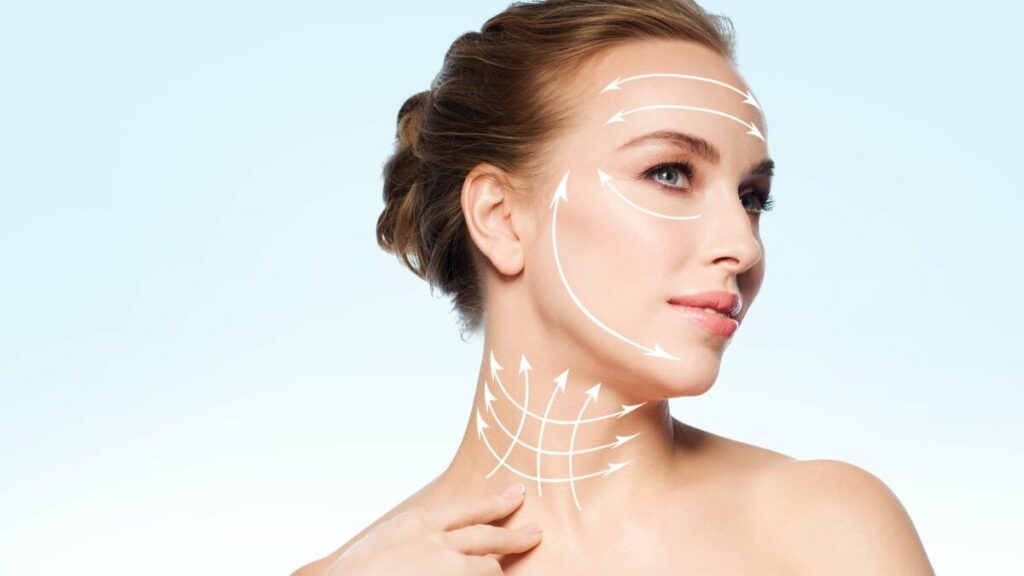
The question “how to get rid of a double chin: cosmetology or home care?” has a fairly straightforward answer. If the cause is localized fat or noticeable ptosis, professional methods make it possible to affect structures that creams or home massage simply cannot reach.
Choosing a procedure starts with a consultation with a cosmetologist: the specialist evaluates the thickness of the fat layer, skin quality, the degree of swelling, the contour of the lower jaw, and general contraindications.
RF lifting
Radiofrequency techniques use controlled heating of tissues. One of the main goals of this effect is collagen remodeling and improving skin firmness.
Scientific reviews show that RF technologies may improve skin flexibility, elasticity, and overall appearance. The mechanism is associated with controlled heating of the dermis, contraction of existing collagen fibers, and subsequent collagen remodeling.
RF lifting may be particularly appropriate when:
- the skin has become less firm;
- the jawline has lost definition;
- there is moderate laxity;
- the main concern is tissue quality.
At the same time, the term RF refers to different technologies and devices that work at different depths. Therefore, the expected result depends not only on the name of the procedure but also on the specific system and treatment parameters.
SMAS lifting (Ultraformer)
Device-based SMAS lifting, targeting the superficial musculoaponeurotic system, uses focused ultrasound for controlled treatment at a predetermined tissue depth. It is used, among other indications, to correct age-related loss of definition in the lower third of the face and neck.
Systematic reviews of HIFU/MFU (High-Intensity and Micro-Focused Ultrasound) studies show improvements in the firmness and tightening of facial and neck tissues; positive changes are particularly often described in the lower third of the face and neck. However, the effect is generally considered moderate rather than equivalent to a surgical facelift.
Ultraformer may be considered if you need to:
- make the lower third of the face look more defined;
- address moderate loss of tone;
- improve the contour of the chin and neck without surgery.
There are also studies on the use of HIFU directly for submental fatty tissue, although the capabilities of a specific device depend on the cartridges used, treatment depth, and protocol.
This is a medical device-based procedure, so preliminary assessment of anatomy and indications is just as important as the name of the device itself.
Lipolytics
The term “lipolytics” is often used to describe different injectable products, so it is especially important not to generalize.
The best-studied option is deoxycholic acid for the correction of submental fat. The FDA has approved a deoxycholic acid-based product for improving the appearance of moderate to severe fullness under the chin caused specifically by subcutaneous fat in adults.
This is fundamentally different from massage: the product is injected directly into fatty tissue and has a cytolytic effect on fat cells.
However, lipolytics are not a universal solution. If the volume is mainly caused by sagging skin rather than fat, simply reducing the amount of fatty tissue may not produce the desired contour.
In addition, injections into the submental area require detailed knowledge of anatomy. Known adverse reactions to deoxycholic acid include swelling, bruising, pain, and numbness; more serious complications are also possible, including injury to the marginal mandibular nerve. That is why such procedures should be performed by a qualified medical professional after an examination.
Lymphatic drainage procedures
When the face is prone to swelling, a change in contour after a lymphatic drainage procedure can sometimes be noticeable quite quickly. The reason is simple: the amount of fluid retained in the tissues changes.
This does not mean that fat disappears after a single session. Lymphatic drainage may be particularly appropriate when:
- the face is noticeably swollen in the morning;
- the contour changes throughout the day;
- there is a tendency toward fluid retention;
- a supportive procedure is needed as part of a comprehensive program.
In cases of true lymphedema, manual lymphatic drainage is a specialized technique rather than simply an intensive massage.
LPG massage and Endospheres
Device-based massage techniques allow tissues to be treated in a more standardized way than home massage.
LPG massage uses mechanical and vacuum effects. Data from a scientific review of vacuum massage indicate that some of the most commonly described physical changes include effects on tissue elasticity and density, although the quality of the evidence depends on the specific indication and technique.
Endospheres works on the principle of compressive microvibration. On the face, it is used primarily to address swelling, microcirculation, and tissue tone.
Both LPG and Endospheres are more logically viewed not as direct alternatives to injectable fat correction but as parts of a broader program when the goals include:
- reducing swelling;
- supporting reduced tissue tone;
- improving contour definition when fluid retention is involved;
- maintaining the results of comprehensive care.
How to understand which procedure is right for you
The most logical place to start is by understanding the cause of excess volume in a particular area. The general approach looks like this:
- if the appearance of the chin changes during the day and the face becomes swollen, it is worth assessing the role of fluid retention and lymphatic drainage techniques;
- if there is a localized soft fat fold with sufficiently firm skin, a specialist may consider methods for correcting submental fat;
- if there is little fat but the skin has become less dense, RF techniques may make more sense;
- if there is noticeable loss of definition in the lower third of the face and moderate ptosis, focused ultrasound may be discussed.
This is how professional cosmetology works: first the condition of the tissues and the expected result are assessed, and only then is the procedure selected.
How many procedures are needed to reduce a double chin?
There is no single number. Different methods have completely different treatment-course logic. For massage and lymphatic drainage programs, regularity is usually important. Device-based lifting technologies may require fewer sessions, with results developing gradually over the following weeks and months.
For deoxycholic acid injections, for example, the official FDA instructions allow up to six treatments at intervals of at least one month, although a particular person may need fewer.
Therefore, the question of how many procedures are needed should only be answered after an assessment. The number depends on:
- the cause of the double chin;
- the amount of fatty tissue;
- skin firmness;
- age and tissue condition;
- the selected method;
- individual response;
- the desired degree of correction.
It is also important to agree on realistic expectations before starting a course: not every anatomical feature can or needs to be completely eliminated through cosmetology.
How to prevent a double chin
It is impossible to completely control the shape of the lower third of the face because it is influenced by genetics, jaw structure, and natural age-related changes. However, you can support the condition of the tissues.
The basics are fairly simple:
- avoid frequent and drastic weight fluctuations;
- protect the skin of the face and neck from excessive ultraviolet exposure;
- moisturize the skin regularly;
- maintain overall physical activity;
- do not rely on “fat-burning” creams or aggressive self-massage;
- if you have a pronounced tendency toward swelling, discuss the possible cause with a doctor;
- if necessary, maintain the result with professional procedures according to the recommended schedule.
Regular care makes more sense in this case than trying to “urgently remove” changes that have developed over years.
Conclusion
So, how can you get rid of a double chin? Start not with a massage exercise from TikTok or the name of a device, but with identifying the cause.
Massage, lymphatic drainage, LPG, and Endospheres may help with swelling, microcirculation, and tissue tone. RF lifting and HIFU/SMAS techniques are used when the goal is to improve firmness and tightening. Injectable methods may be appropriate for localized accumulations of subcutaneous fat.
At the same time, home massage and creams remain supportive care: they cannot independently eliminate a significant localized fat pad or pronounced ptosis.
The optimal plan sometimes consists not of one procedure but of a sequence of treatments addressing several causes. Therefore, before starting correction, it is better to have a consultation, assess the tissues, and agree in advance on what result can realistically be expected.