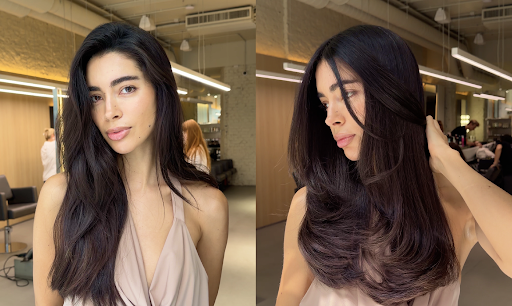
Long hair offers plenty of room for experimentation, but that can also make choosing a haircut more difficult. Keep a blunt cut? Add layers? Go for a cascade, bangs, or shorter face-framing strands? And most importantly: will the haircut look just as good without salon styling?
A good haircut for long hair starts with the hair’s texture, density, and how you are used to wearing it. The same shape behaves differently on fine straight hair, dense waves, and springy curls. A haircut that looks impressive after a blowout may require a completely different level of care at home.
Below, we look not only at different types of haircuts for long hair, but also at who they suit, how much styling they require, and what results you can expect.
Why Long Hair Needs Regular Trimming
If your goal is to grow your hair, it may seem logical to avoid cutting it for as long as possible. But length alone does not mean that the hair will look thick and well cared for.
The ends are the oldest part of the hair. They spend the longest time in contact with hair dryers, curling irons, clothing, sunlight, coloring products, and mechanical friction. As a result, they can gradually become drier, thinner, and more prone to breakage.
The American Academy of Dermatology notes that improper brushing, frequent exposure to high temperatures, and other everyday habits can increase breakage and split ends.
Regular shape correction helps to:
- remove thin and damaged ends;
- maintain a dense outline along the length;
- prevent layers from losing their shape;
- refresh the strands around the face;
- make brushing and styling easier;
- preserve the proportions of the haircut even as the hair continues to grow.
This does not mean that you need to remove a significant amount of length at every visit. Sometimes a minimal trim of the ends and shape is enough. Before a women’s haircut, it is worth discussing with your stylist how many centimeters you are comfortable removing and what length you want to keep after drying.
How to Choose a Haircut for Long Hair
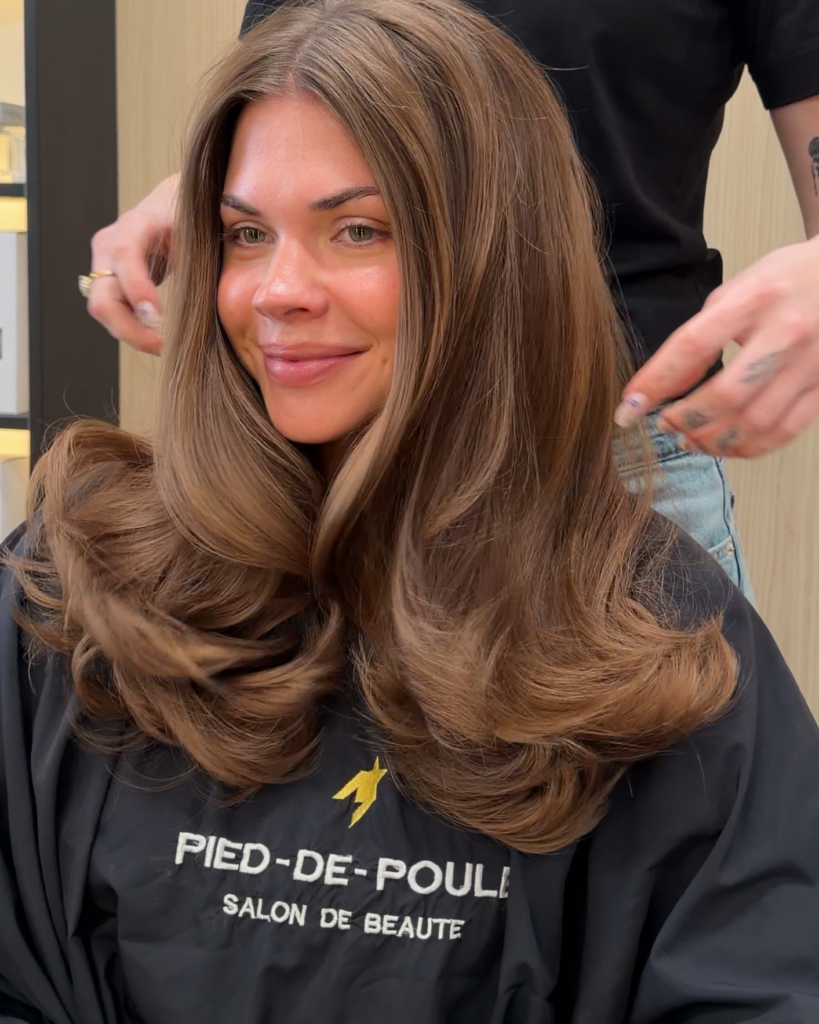
A Pinterest or Instagram photo can help explain the desired look, but it should not be the only reference point. It is much more important to understand why a particular shape works on the hair in the photo and whether a similar result can be achieved on your own texture.
Before getting a haircut, consider:
- natural texture — straight, wavy, or curly hair;
- density;
- thickness of individual strands;
- natural volume at the roots;
- condition of the lengths and ends;
- whether the hair is colored or lightened;
- your usual parting;
- how much time you are willing to spend on styling.
That is why it is better to agree on the desired result before the haircut begins: where the first layer will start, how dense the ends will remain, how the haircut will look without a blowout, and how it will grow out. This approach reflects the PIED-DE-POULE principle: first understand the request, then define the expected result.
By Hair Type
- Straight hair. The geometry of the cut is especially visible on straight hair, which also makes unevenness more noticeable. A haircut for long straight hair can be almost blunt, U-shaped, or feature long, soft layers. If the hair is fine, excessive thinning can visually reduce density.
- Wavy hair. Natural waves already create movement, so long layers and face-framing strands work well. Haircuts for long wavy hair should take into account how much the wave shortens the length after drying.
- Curly hair. Here, not only length but also volume distribution matters. A haircut for long curly hair can have a rounded shape, soft layers, or a cascade, but the height of the layers depends on the curl pattern and hair density. The American Academy of Dermatology also recommends paying more attention to moisturizing curly hair because it tends to be more prone to dryness.
- Thick hair. Long layers can remove excess weight and add movement. Vogue also mentions long layers and butterfly cuts among styles that help redistribute the mass of thick hair.
- Fine hair. The goal is often the opposite: not to remove weight, but to visually preserve it. A denser lower outline and a limited number of carefully placed layers usually work better.
By Face Shape
Face shape is a useful reference when deciding which hairstyle will suit you. However, even more important is where the shortest strands are placed, because they create the main frame around the face.
- For a round face, longer front strands below the cheekbones or chin are often chosen. They create vertical lines and avoid adding extra volume around the cheeks.
- For a square face, soft layers and a gentle fringe can help soften the jawline.
- For a long face, more volume at the sides, curtain bangs, or another type of fringe can help visually balance the proportions.
- For an oval face, there is the widest range of options, from a blunt length to an active cascade. The choice usually depends more on texture and the desired amount of styling.
- For a heart-shaped face, strands that open around the cheekbones and chin tend to work well.
British Vogue also recommends discussing with your hairstylist not an abstract “ideal face shape,” but the specific length and placement of layers that highlight the eyes and cheekbones.
The Most Popular Haircuts for Long Hair
Hair below the shoulders can be shaped into very different silhouettes without dramatically changing the overall length.
| Haircut | Best for | What it gives | Care and styling |
| Blunt cut | fine, straight, or moderately thick hair | dense outline, visual fullness | minimal |
| U-shaped cut | medium to thick hair | soft back silhouette without sharp layers | low |
| Cascade / long layers | thick, wavy, straight hair | movement, lightness, less weight | medium |
| Butterfly cut | medium or thick long hair | volume around the face while keeping the length | medium/high |
| Face-framing layers | most hair textures | emphasis on the face without a major change in length | low/medium |
| Shag / soft shag | wavy, textured hair | pronounced texture and movement | medium |
| Asymmetrical shape | straight or wavy hair | a more graphic, unusual silhouette | medium |
Cascade
A cascade haircut for long hair is based on a gradual change in strand length. The cascade can be very soft and almost invisible or more pronounced, with shorter upper layers.
On thick hair, it helps visually reduce excess bulk, while on wavy hair it emphasizes natural movement. With fine hair, however, it is important to be careful: too many short layers can make the lower part of the haircut look thinner.
Butterfly Cut
A butterfly cut keeps the main length while adding more noticeable shorter layers around the face and in the upper sections. These layers create the characteristic volume associated with a blowout.
Harper’s Bazaar includes the butterfly cut among the notable trends of 2026, while Vogue lists it as one of the options for thick hair.
This shape is especially suitable if you want a noticeable change without sacrificing length. However, to achieve the same airy effect often seen in photos, you will need at least basic blow-drying or brushing.
Long Layers
This is one of the most subtle ways to refresh long hair. The layers start lower and blend smoothly into the main body of the hair.
Glamour UK notes that in 2026, long haircuts are becoming softer and more dynamic, with lighter layers and more emphasis on face-framing. This option works well for those who do not want their haircut to require daily styling.
Asymmetrical Haircuts
Asymmetrical haircuts for long hair are less universal but can be an interesting option. Asymmetry can be created through the parting, different lengths of the front strands, a diagonal outline, or bangs.
The more graphic the asymmetry, the more important regular maintenance becomes: as the hair grows, the intended geometry gradually becomes less defined.
More haircut options can be found in the PIED-DE-POULE haircut section.
Which Haircuts Add Volume
There is an important difference between volume and density. Layers can create more movement and lift the upper part of the hairstyle, but if too much hair is removed from the lower section, the ends may actually appear thinner.
For visual volume, the following usually work well:
- butterfly cut;
- long layers;
- soft cascade;
- face-framing;
- curtain bangs;
- U-shaped outline with subtle layers.
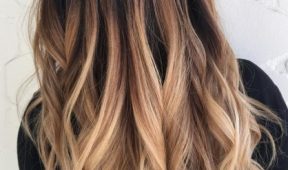
If you want to enhance the impression of volume with color as well, multidimensional coloring creates lighter and darker areas throughout the length. For example, AirTouch creates soft transitions between shades, which become especially noticeable in motion on long layers. PIED-DE-POULE notes that the technique can create the visual effect of fuller hair.
Which Haircuts Work Best for Thick Hair
Haircuts for long thick hair usually have one of two goals: either preserve the characteristic density or slightly reduce the weight of the hair.
If the hair is heavy and quickly loses volume at the roots, you can add:
- long internal layers;
- cascade;
- butterfly layers;
- face-framing;
- a soft U-shaped outline.
On very straight, thick hair, overly short upper layers can look like a separate step. On wavy hair, the same technique often appears much softer, so the cutting pattern should be adapted to the texture.
Vogue also highlights the difference between strand thickness and overall hair density. Two people may both describe their hair as thick, even though one needs excess density removed while the other has thick individual strands but an average amount of hair.
Which Haircuts Suit Fine Hair
More layers do not necessarily mean more volume for fine hair. Short layers can lift the top, but they can also remove density from the lengths.
For fine long hair, it is often better to:
- keep a relatively dense lower outline;
- use minimal thinning;
- start the layers lower;
- concentrate the shape around the face;
- avoid a large difference between the shortest and longest layers.
If the ends have already become very thin, it can sometimes be more visually flattering to remove a little more length and create a dense cut than to preserve the maximum number of centimeters.
Color is another tool. Balayage creates light accents and additional depth, which can make the hair appear more dimensional.
Bangs and Long Hair
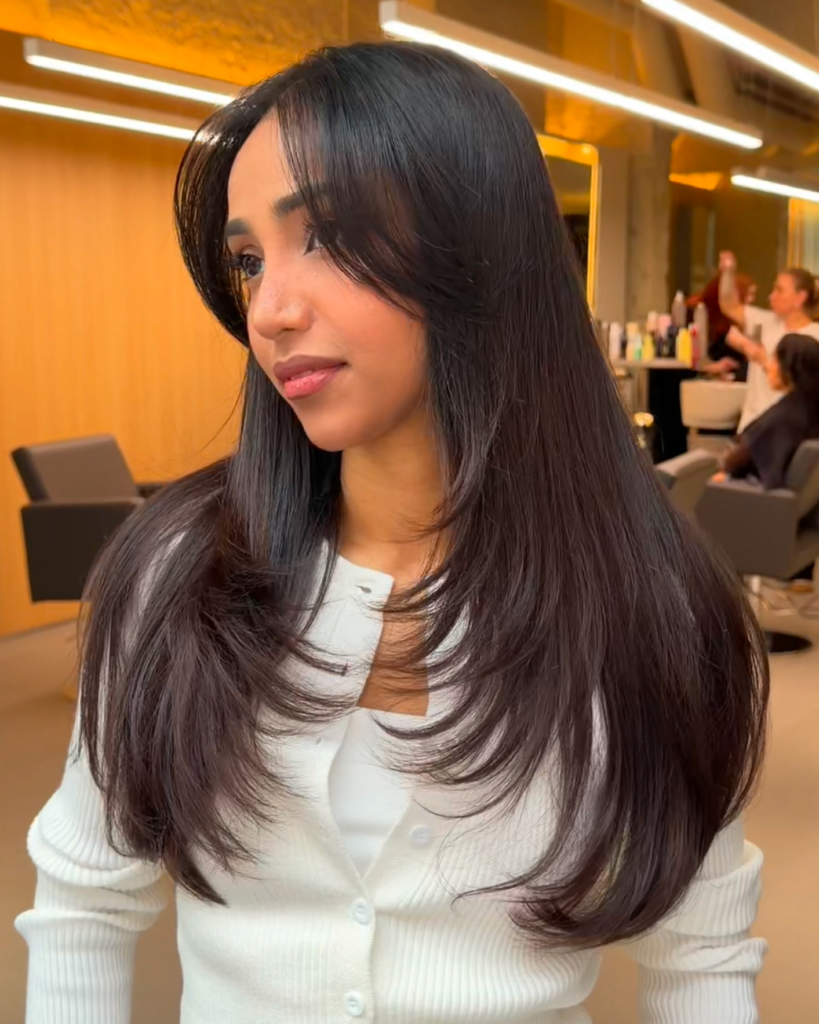
Women’s haircuts for long hair with bangs can change the overall look much more noticeably than simply trimming the ends, while the main length remains intact.
The most common options include:
- Curtain bangs. They part from the center and gradually blend into the strands around the face. This is one of the most convenient options for long hair because it grows out quite softly.
- Long bangs. They may reach the cheekbones or chin and effectively become part of the face-framing.
- Straight bangs. They create a more noticeable change in appearance but require more regular maintenance.
- Wispy bangs. A light, less dense fringe that allows part of the forehead to remain visible.
- Side-swept bangs. Haircuts for long hair with side bangs work well with a side part and asymmetrical shapes. British Vogue also includes side fringes among the relevant directions for 2026.
- Birkin bangs. A softer, slightly undone fringe inspired by Jane Birkin. In July 2026, British Vogue again highlighted interest in Birkin bangs combined with light layers.
Before cutting bangs, consider not only your face shape but also your parting, the direction of hair growth, and whether you are willing to style them in the morning. Glamour UK’s overview of bangs for long hair also shows how strongly the final result depends on how the fringe is integrated into the side layers.
How to Care for a Long Haircut
The longer the hair, the more important it is to protect not only the roots but also the entire length. Basic care is simple:
- use conditioner after washing;
- detangle the hair starting from the ends and gradually work upward;
- do not rub wet hair with a towel;
- use heat protection before hot styling;
- avoid using the highest temperature setting unless necessary;
- monitor the condition of the ends and refresh the shape on time.
Conditioner helps reduce breakage and split ends, while gently detangling from the ends upward reduces mechanical damage.
Long, lightened hair requires particular attention. In this case, it is worth choosing both home and professional hair care based on the actual condition of the hair, not just its length.
If you combine a haircut with coloring, the shape also affects how the color is perceived. For example, highlights on layered hair can emphasize the haircut’s texture because lighter strands create additional depth.
Which Haircuts Are Trending Now
In 2026, fashionable haircuts for long hair are noticeably shifting away from complex graphic shapes toward movement, soft layers, and styles that can easily adapt to the hair’s natural texture.
Several directions appear repeatedly in forecasts from Vogue, British Vogue, Glamour UK, and Harper’s Bazaar: long layers, face-framing, butterfly cuts, curtain bangs, side fringes, and more pronounced natural texture.
1. Airy Long Layers
Glamour UK describes current long hair as softer and more dynamic: the layers should not look like separate “steps” but should blend smoothly into one another.
This is a good choice for those who like fashionable women’s haircuts for long hair but do not want to completely change their home-care routine.
2. Butterfly Cut
The trend remains noticeable in 2026. Its main advantage is that you can create a completely different silhouette around the face without sacrificing much of the overall length.
3. Bangs Integrated into Layers
Instead of bangs that exist separately from the haircut, more current styles allow the fringe to blend smoothly into face-framing layers. This includes curtain bangs, long side fringes, and shapes inspired by Jane Birkin.
4. Natural Waves and Curls
Youthful haircuts for long hair increasingly avoid the need to completely reshape the natural texture every morning with a hair dryer or styler. The cut can be designed so that the natural wave or curl creates the desired silhouette on its own.
5. Haircut Plus Multidimensional Color
Another direction is to treat color and shape as a single concept. British Vogue highlights natural, glossy colors among 2026 trends, while Vogue describes hair contouring — placing lighter accents so that they emphasize the layers and framing around the face.
For this reason, before complex coloring, it can be useful to decide on the future haircut shape first. A full list of techniques is available in the hairdressing services section.
In this case, trends are better used as a catalogue of ideas rather than as instructions. If a butterfly cut looks great in a photo but you never do a blowout, the stylist can adapt it by keeping the layers longer and creating similar movement with easier at-home styling. This kind of adaptation is usually more important than copying the exact name of the haircut.
Conclusion
There is no single best haircut for long hair, but there is a shape that works well specifically with your texture, density, and lifestyle.
If you want maximum density, consider a blunt or U-shaped cut. If the hair lacks movement, long layers or a cascade may be a better choice. For thick hair, layers help redistribute weight, while for fine hair it is important not to remove too much density. Butterfly cuts and face-framing can noticeably refresh the look without sacrificing the main length, while bangs can completely change the proportions of the haircut.
The most useful thing to do before your appointment is not simply to show a reference photo, but to explain exactly what you like about it. Think about volume around the face, lighter ends, density through the length, movement, or the overall silhouette. The shape can then be adapted to your hair and the expected result agreed on in advance.