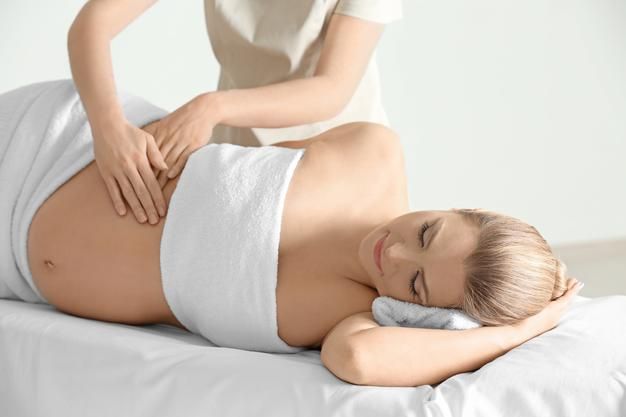
Massage for expectant mothers helps reduce muscle tension, fatigue, and discomfort while taking the woman’s individual condition into account. During pregnancy, the body undergoes significant physical changes, so pregnancy massage is performed using a specially adapted technique. The treatment involves appropriate body positioning, gentle pressure, and careful selection of areas that can be safely worked on.
How pregnancy massage differs from a regular one
Classic back massage involves intensive kneading of the muscles and rarely takes the client’s body position into account — during pregnancy, the approach is different. The mother-to-be lies on her side, supported by pillows under the belly and knees, since lying on the back isn’t recommended after the first trimester. The movements are less rhythmic and less intense than in ordinary massage — this is a deliberate choice, not a limitation on the therapist’s part.
At PIED-DE-POULE, a gentle approach is used during pregnancy massage. The therapist avoids areas that require particular caution and does not use aggressive techniques. A neutral oil without strong aromatic ingredients is selected for the treatment to ensure comfort throughout the session.
Massage types allowed and not allowed during pregnancy
Not all techniques suit pregnant clients — the choice is deliberately narrowed down to the safest ones:
- classic back massage in an adapted position — without aggressive kneading
- neck and shoulder massage — relieves fatigue and improves sleep
- lymphatic drainage massage — gently reduces swelling
- head massage — relaxing, without touching areas that require particular care
As part of the service at PIED-DE-POULE, we combine these elements to suit the specific request — the main focus is on the back and neck-shoulder area, with the lymphatic drainage effect for the legs or additional head work added as needed.
Anti-cellulite massage, cupping techniques, lifting massage, and device-based methods such as LPG are set aside during pregnancy — they too actively and rhythmically boost blood and lymph microcirculation, which isn’t recommended during this period. Honey massage, with its intensive detox technique, is also usually left until after birth.
Indications and when to postpone massage
Indications:
- tension in the back, lower back, and neck from changes in posture
- swelling and heaviness in the legs
- general fatigue and heightened stress levels
- mild headaches linked to hormonal changes
Massage should be postponed if there is:
- a direct ban from the doctor managing your pregnancy
- raised blood pressure, preeclampsia, or sudden, pronounced swelling
- a severe headache, dizziness, or feeling generally unwell
- spotting, acute pain, or a raised temperature
Which trimester works best for pregnancy massage
Pregnancy back massage can be performed at different stages of pregnancy, but most specialists and studios recommend starting from the second trimester, and always with the approval of the doctor managing the pregnancy. In the first twelve weeks, the risks are higher, so some therapists deliberately hold off on massage during this time. In the second and third trimesters, the approach remains just as careful, though the body position gradually changes — the further along you are, the more pillows and support are needed for comfort and to support the belly.