Highlights no longer mean identical light strands running from the roots to the ends. Modern techniques can make the colour look almost imperceptible, add dimension to the hair or, on the contrary, create a striking contrast. One example is an effect inspired by the atmosphere of warm California, with late-evening walks along the beach and relaxed mornings by the pool.
California highlights create a soft sun-kissed effect on the hair: individual strands are lightened unevenly, while the transition from the natural root area to the lighter sections remains smooth. Classic highlights involve a more systematic selection of strands and usually create a clearer contrast with the base colour.
The California technique is best suited to those who want a natural-looking colour result without a harsh regrowth line. The classic option is worth considering when noticeable lightening or a uniform pattern throughout the hair is required. The final choice depends on the original colour, hair condition, length and desired shade.
What Are California Highlights?
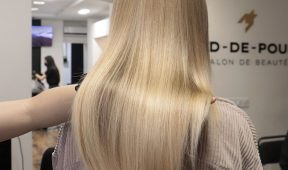
California highlights are a partial lightening technique that imitates strands naturally faded by the sun. The roots usually retain their natural colour or a shade close to it, while the lengths gradually become lighter.
The stylist may combine several similar shades in the hair, including wheat, beige, honey, caramel or cool dark blonde. As a result, the hair does not look flat or monochromatic. It gains colour depth, soft highlights and visual volume.
The main features of California highlights include:
- an uneven, natural-looking pattern of light strands;
- gradual lightening from a darker root area towards the ends;
- no identical stripes throughout the length;
- the option to combine several similar shades;
- a soft colour transition without a sharply defined boundary;
- less noticeable root regrowth;
- a natural appearance on both straight and wavy hair.
This service is sometimes called California colouring, but it is more accurate to refer to it as highlighting because only individual strands are lightened rather than all the hair.
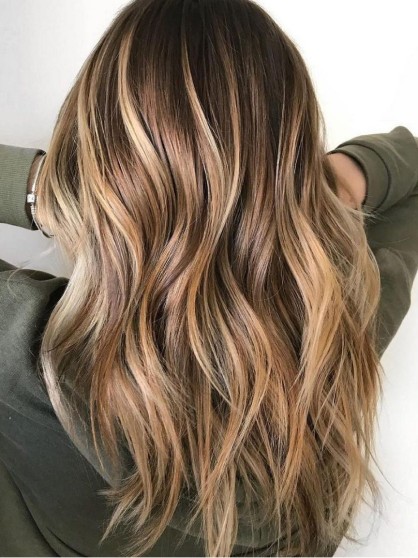
Application Principle and the Sun-Kissed Hair Effect
For California highlights, the colourist creates an individual strand pattern. Some strands are lightened closer to the roots, while others are treated only through the lengths or at the ends. Particular attention may be given to the strands around the face, as they can brighten the complexion and make the hairstyle appear lighter.
The technique is often performed using an open-air method without tightly wrapping each strand in foil. However, the exact method depends on the starting colour and the required level of lift. For dark, dense or previously coloured hair, the stylist may use a combined approach.
The most important element is not whether foil is used, but the colouring pattern, which should not be overly symmetrical. Differences in strand width, application height and lightening intensity create the effect of slightly sun-faded hair instead of visible striping.
Toning is usually performed after lightening. It helps neutralise unwanted yellow or copper tones, blend the highlighted strands with the base colour and achieve the desired natural blonde shade.
Why Is the Technique Considered Gentler on the Hair?
Any type of lightening affects the hair structure and therefore cannot be considered completely harmless. During the chemical reaction, the natural pigment is partially broken down, and the hair may become more porous, dry and sensitive to friction and high temperatures.
In a 2024 study, researchers used electron microscopy to compare natural hair with repeatedly lightened hair. After excessive bleaching, the cuticle scales became brittle, torn and uneven, while the damage also affected the internal structure of the hair shaft. Therefore, carrying out the procedure too frequently is not recommended.
California highlights are considered a relatively gentle option because the product is applied only to selected strands. A significant portion of the hair may remain unlightened, while the root area retains its natural colour. This is especially important for those who are not aiming for the lightest possible blonde.
Before the procedure, the colourist should assess the hair’s elasticity, porosity and density, review the history of previous colouring and determine whether the desired shade is realistic. If the lengths are weakened, the stylist may suggest more delicate lightening, reduce the number of highlighted strands or recommend a professional treatment first.
What Are Classic Highlights?
Classic highlights involve evenly lightening individual strands throughout the hair. The strands may be thin, medium or wide, but they are usually selected according to a clear pattern and repeated at approximately equal intervals.
Unlike the California technique, the lighter sections often begin close to the roots and maintain a similar level of brightness throughout the lengths. This gives the result a more graphic and contrasting appearance.
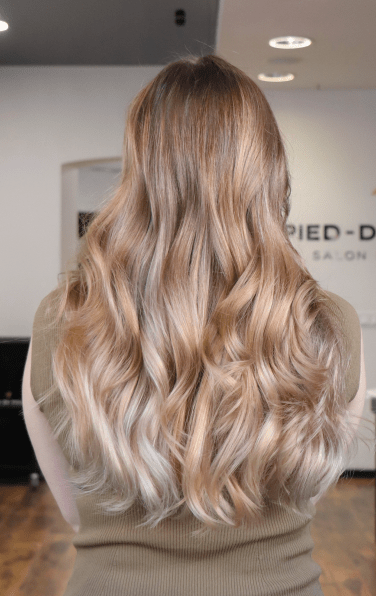
How Are Classic Highlights Performed?
The hair is divided into sections, after which the stylist selects the strands one by one. A lightening product is applied to them, and they are usually wrapped in foil. The foil separates the treated sections from the rest of the hair and helps control the lightening process.
The width of the strands affects the overall result. Very fine highlights can visually bring the overall colour closer to blonde while leaving part of the natural base visible. Wider strands create a more noticeable contrast and a defined rhythm within the hairstyle.
After the lightening product is rinsed out, the hair is toned. This stage is needed not only to create a cool, warm or neutral shade. Toning after highlights also softens the difference between the lightened strands and the base colour and adds shine to the hair.
Who Is the Classic Option Suitable For?
Classic highlights remain a versatile technique. They can be adapted to blonde, dark blonde, chestnut and dark hair by adjusting the strand width, selection density and level of lightening.
The advantages of classic highlights include:
- a clearly visible result without radically changing the base colour;
- an even distribution of lighter strands;
- the ability to make the overall hair colour appear lighter;
- suitability for short, medium-length and long hair;
- the option to disguise the first signs of grey hair;
- different levels of contrast, from frequent fine highlights to wide strands;
- a predictable and clearly structured colouring pattern.
California Highlights or Classic Highlights: What Is the Main Difference?
The choice between the two techniques primarily depends on what you want to see after the procedure. California highlights resemble strands naturally lightened by the sun. Classic highlights create a more even and noticeable pattern.
Difference in Application Technique
Classic highlights involve selecting strands consistently according to a set pattern. The lightening product is applied from the roots or with a small gap, and the strands are isolated using foil.
During California highlighting, the colourist works more freely. The strands may vary in width, application height and lightening intensity. An open-air technique is often used, although the application method may vary depending on the hair structure and desired result.

Difference in the Natural Appearance of the Transitions
The California technique involves lightening the hair without a harsh contrast. The lightest areas may be placed around the face and at the ends, while strands of the natural colour remain between them. This creates a multidimensional hair colour that looks different under various lighting conditions.
With classic highlights, the lighter strands are more clearly visible. Even after toning, the pattern remains more even. The result does not necessarily have to look harsh: fine strands and a correctly selected shade can make it appear subtle. However, the classic technique is generally more contrasting.
Difference in Result Longevity and Correction Frequency
California highlights grow out more softly because the natural or darkened root area is preserved. A full correction can often be carried out once every three to four months, while the shade can be maintained between appointments with toning.
Classic highlights require more regular maintenance, especially when the strands begin close to the roots and differ significantly from the natural colour. On average, the root area is corrected once every six to eight weeks. If the contrast is low or the highlights are sparse, the interval may be longer.
| Criterion | California highlights | Classic highlights |
| Application technique | Predominantly a freehand pattern with different strand widths and application heights; often performed using an open-air method | Strands are selected consistently according to a pattern and are usually isolated with foil |
| Visual effect | Soft and blended, resembling natural sun fading | Even, with lighter strands clearly visible against the base colour |
| Smoothness of the transition | A soft colour blend without a clear boundary at the roots | The transition is more noticeable, especially as the root area grows out |
| Level of contrast | Low or medium | Medium or high |
| Who it suits | Particularly effective on dark blonde, medium brown and chestnut bases | Can be performed on any base colour |
| Optimal length | Works well on bobs, medium-length and long hair | Suitable for any hair length |
| Frequency of full correction | Approximately once every 3–4 months | Approximately once every 6–8 weeks |
| Shade maintenance | Toning approximately once every 4–8 weeks, depending on the colour | May require regular toning because of the more noticeable contrast |
California highlights also differ from other popular complex hair-colouring techniques:
| Technique | Main feature |
| Airtouch | Strands are selected by blowing the hair with a hairdryer, separating shorter hairs from longer strands to which the colour is applied |
| Balayage | The lightening product is applied with sweeping strokes over the surface of the strands to create an individual pattern |
| Shatush | Blending or backcombing is used to create a soft transition from a darker base |
| Ombre | The transition from the dark root area to the lighter ends is more visible and structured |
| California highlights | Combines unevenly lightened strands of different widths to create the effect of natural sun fading |
Who Is Each Technique Suitable For?
There is no universal technique that works equally well on every type of hair. The colourist considers the starting base, the presence of grey hair, previous colouring, length, density and the usual styling method.
California highlights are suitable for those who:
- want a sun-kissed effect on the hair;
- do not want to lighten the root area regularly;
- prefer caramel strands or beige and honey hair shades;
- want to add volume to the hairstyle without becoming fully blonde;
- prefer a soft colour transition;
- are prepared to maintain the shade with toning;
- want regrowth to look natural.
California Highlights on Dark Hair
On dark hair, the technique creates beautiful dimension but requires especially precise shade selection. If the strands are made too light immediately, a harsh contrast may appear between them and the base colour, which contradicts the main idea of California highlights.
Caramel, coffee, hazelnut, honey or beige shades are often chosen for chestnut and dark blonde hair. On a very dark base, lightening may be carried out gradually, especially if the hair has previously been coloured with a permanent dark dye.
It is important to remember that artificial pigment does not always lighten evenly. Therefore, the colourist may perform a strand test before the procedure. This will show how much the colour can be lifted and what shade will appear after lightening.
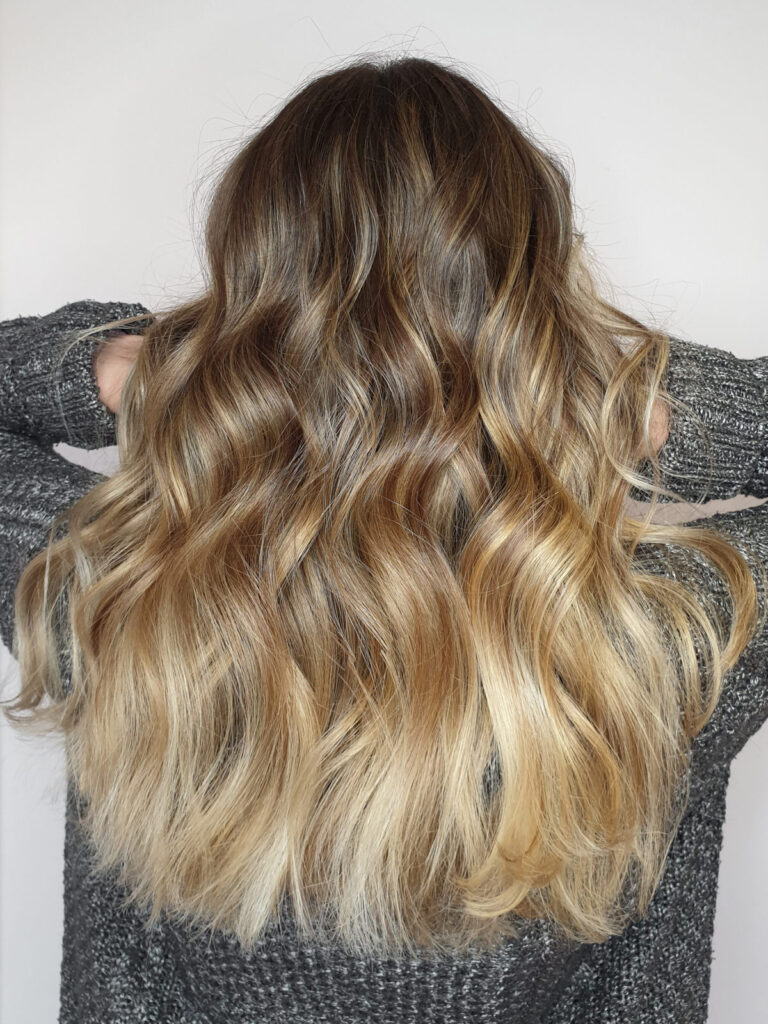
California Highlights on a Bob and Short Hair
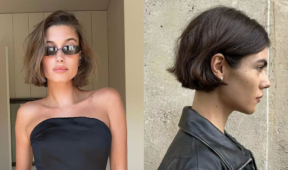
California highlights on a bob help emphasise the shape of the haircut. Lighter strands around the face make the overall appearance fresher, while highlighted ends add movement to the hairstyle.
On short hair, it is especially important to position the accents correctly. If too many equally light strands are created, the colouring may lose its natural appearance. Therefore, the stylist considers the parting, styling direction, fringe and haircut texture.
The technique works well on a classic bob, a short bob, a long bob and layered hairstyles. The dimension is most visible with light styling or natural waves.
California Highlights on Medium-Length and Long Hair
Highlights on medium-length hair provide enough space for a smooth transition without requiring the same complex colour distribution as very long hair. The lightening can be concentrated around the face, on the upper layer or closer to the ends.
On long hair, the California technique appears particularly expressive. The colourist can combine several levels of brightness, leave darker strands to create depth and produce a long colour gradient. However, the procedure takes more time and requires more product.
If the ends are dry or have already been lightened several times, they do not necessarily need to be treated again throughout the entire length. The stylist can update only selected areas and apply toner to even out the colour.
Classic Highlights: When Is This Technique Chosen?
Classic highlights are a better option when:
- clearly visible lighter strands are required;
- the goal is to make the overall hair colour appear significantly lighter;
- the lightening needs to be distributed evenly throughout the hair;
- partial coverage of grey hair is needed;
- a contrast between lighter strands and the natural base is preferred;
- the hairstyle is short and does not provide enough length for a pronounced colour gradient;
- the client is prepared to correct the root area regularly.
The classic technique can also be the first stage of a gradual transition from light brown hair to blonde. In this case, the frequency and thickness of the strands are selected so that the overall tone becomes lighter without bleaching all the hair.
How Much Do Hair Highlights Cost?
The cost of highlights is calculated individually. Even with the same hair length, two clients may require different amounts of product and time. For example, thick natural hair and fine, previously lightened lengths require different approaches.
Price of California Highlights
For the search query “California highlights on dark blonde hair price,” the cost may vary depending on the preliminary assessment. The price is influenced by the number of strands that need to be lightened, whether previous colouring requires correction, how many shades will be used and what type of toning will be performed after the procedure.
For natural dark blonde hair, delicate lightening of selected areas may sometimes be sufficient. Dark or previously coloured hair may require more complex work, additional colour removal or several stages.
The exact price is determined by the stylist after a hair assessment. The current base price of the service can be viewed in the salon price list or confirmed during online booking. “California” highlights with full-length toning and styling usually cost around UAH 5,000.
What Determines the Cost of the Procedure?
The price is affected by:
- hair length and density;
- the starting and desired colour level;
- whether the base is natural or coloured;
- the history of previous lightening procedures;
- the number and width of the strands;
- the complexity of the colouring pattern;
- the amount of lightening product and dye required;
- the need for preliminary colour correction;
- toning after lightening;
- additional professional hair treatment;
- the stylist’s qualification category.
How Long Does the Effect Last and How Often Is Correction Needed?
Lightened strands do not return to their original colour because their pigment has already been changed. However, the toner gradually washes out, natural hair grows and the shade may become warmer.
California highlights usually maintain a neat appearance for several months. Because of the soft transition, correction does not necessarily involve lightening the entire length again. The stylist may add new strands in the root area, refresh the accents around the face and tone the lengths.
A full correction is usually performed once every three to four months. Toning may be needed sooner, approximately every four to eight weeks. The interval depends on the chosen shade, washing frequency, water quality and home care.
Classic highlights grow out more noticeably. If the lighter strands begin close to the roots, an update may be required once every six to eight weeks. When the contrast is low and there is only a small amount of grey hair, corrections may be performed less frequently.
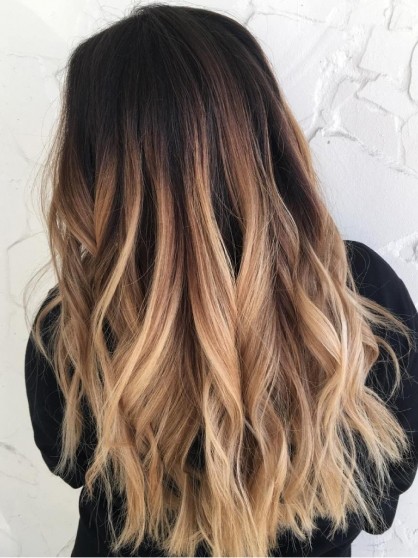
Hair Care After Highlights
After lightening, the hair may lose moisture more quickly, react more strongly to heat styling and break more easily during rough brushing. Home care cannot return the strands to the condition of natural, unlightened hair, but it helps reduce dryness, maintain smoothness and preserve the colour for longer.
Hair care recommendations after lightening include:
- use a shampoo and conditioner for coloured or lightened hair;
- do not wash your hair with excessively hot water;
- apply conditioner to the lengths after every wash;
- use a mask twice a week according to the condition of the hair;
- apply heat protection before using a hairdryer, curling iron or straightener;
- reduce the temperature of heated styling tools;
- brush the hair carefully, starting from the ends;
- protect the lengths from intense sunlight;
- rinse out chlorinated water after swimming;
- do not use purple shampoo every day;
- follow the toning schedule recommended by your colourist.
Toning and Colour Maintenance
Toning the hair after highlights helps create the final shade. It can make the lightened strands cooler, beige, honey, wheat or caramel. Without toning, the result may appear too warm or uneven.
The pigment in a toning dye gradually washes out. This is a normal process and not a sign that the procedure was performed incorrectly. To preserve the shade for longer, avoid using aggressive clarifying shampoos unnecessarily and do not wash the hair with very hot water.
Purple or blue products can temporarily neutralise yellow or copper undertones, but they should be selected according to the specific colour. Excessive use may make the lengths look dull, dry or unevenly grey.
Home Care and Recommended Products
Lightened hair usually requires a combination of moisturising, softening and strengthening products. However, using a large number of products does not always produce better results. It is more important to choose a clear routine and follow it consistently.
A basic set may include a gentle shampoo, conditioner, mask, leave-in product and heat protectant. Serums or creams may also be suitable for porous lengths, as they reduce friction, make brushing easier and help maintain shine after colouring.
The colourist recommends products after assessing the hair. Fine strands can easily become weighed down by overly rich masks and oils, while a light spray may not be sufficient for thick, dry lengths.
Why Do Our Clients Choose Highlights at PIED-DE-POULE?
At PIED-DE-POULE, colouring begins with a diagnosis based on a unique method that allows the approach to be personalised for each procedure. The colourist assesses the condition of the hair, reviews the history of home and salon colouring, discusses the desired result and asks about the client’s usual care routine. This helps determine immediately whether the required shade can be achieved in one appointment.
Before beginning the procedure, the stylist agrees on the technique, level of contrast, placement of the lighter strands and final tone. California highlights are not performed according to one fixed template: the pattern is adapted to the shape of the haircut, the parting, hair density and facial features.
The lightening process is monitored throughout the procedure. Afterwards, the hair is toned and, if necessary, treated with professional care products. At the end of the appointment, the stylist explains how to maintain the colour at home and when it is best to schedule the next visit.
At the salon, clients can choose classic or California highlights as well as other hair-colouring options. You can select a suitable technique and book a consultation online.