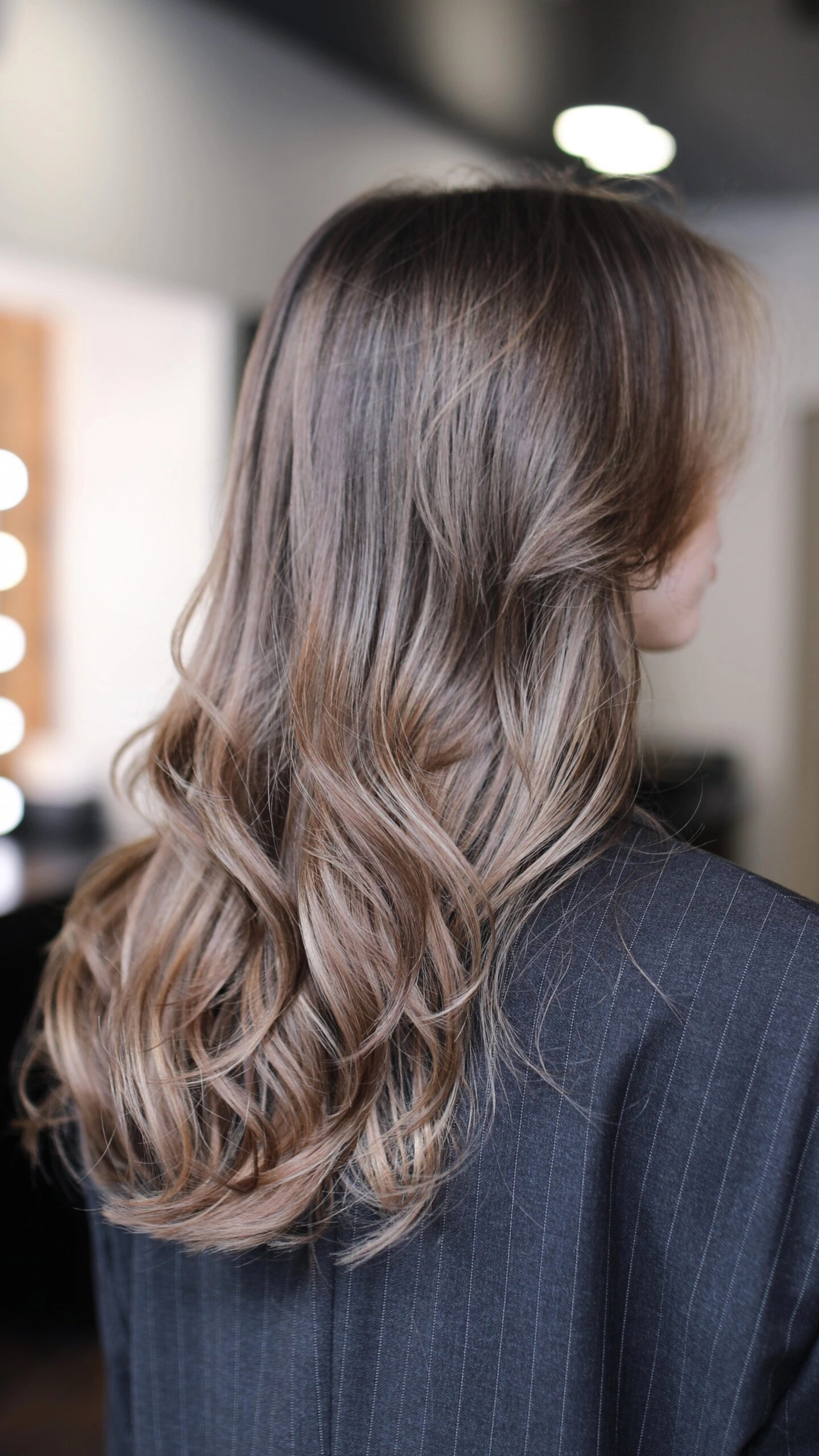
Exiting black hair colour means gradually lightening the hair and then toning it to the desired shade. The procedure is carried out in several stages using professional dyes and products that protect and rebuild the hair’s structure. The main goal is an even, healthy colour without excessive damage to the hair.
Moving away from a dark hair colour can involve removing artificial pigment, gradual lightening, colour correction, and subsequent toning. The exact technique depends on the starting shade, colouring history, strand structure, and the desired result.
A Safe Alternative to Lightening at Home
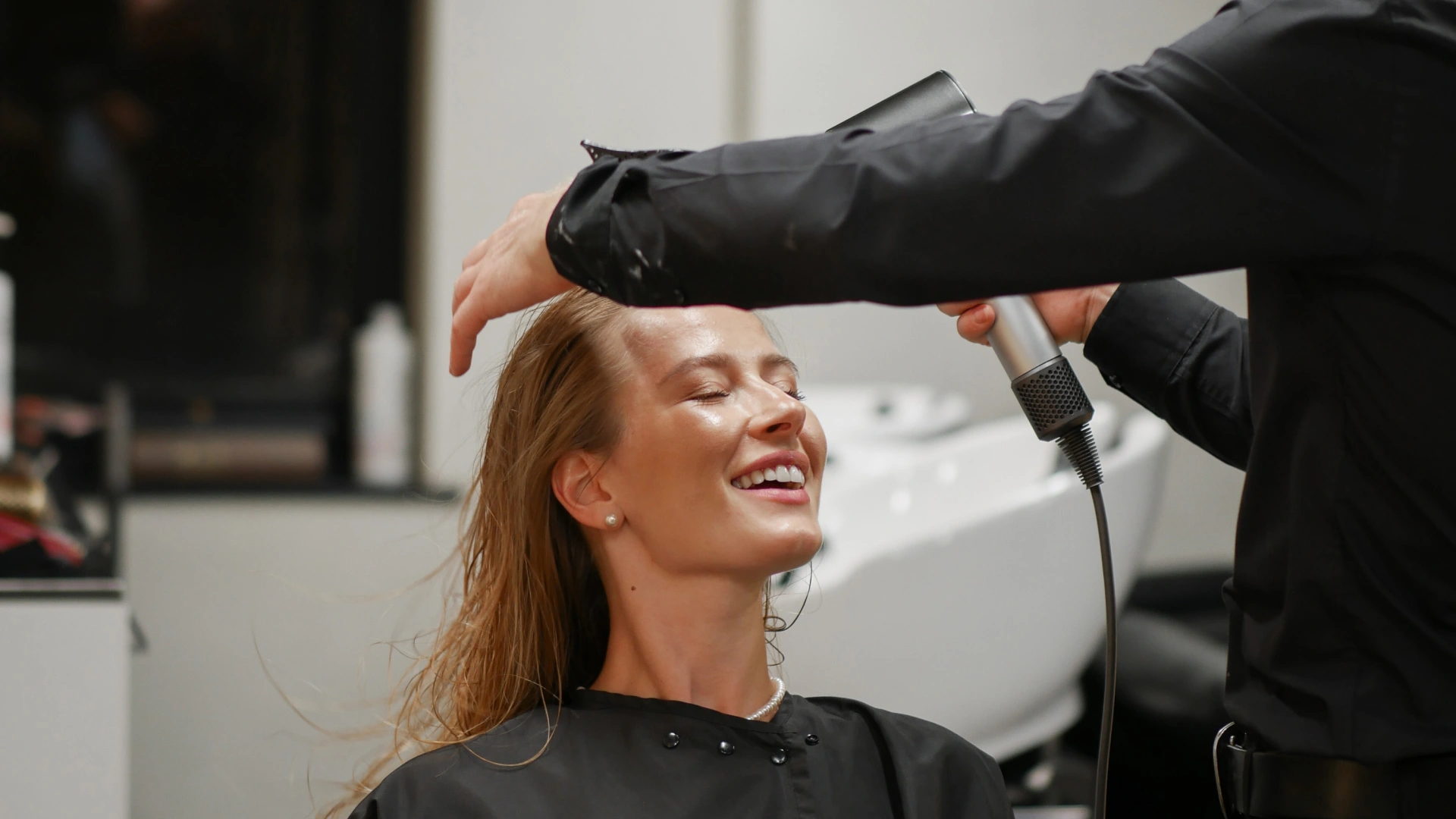
Home experiments with lightening black hair often end in over-dried hair, patchy colour, and unpredictable shades. In the salon, we use gradual lightening, controlling every level of tone. The stylist monitors how the hair reacts and applies protective systems such as Olaplex, Lebel, or Brae, keeping the process controlled and predictable.
Professional lightening of black hair allows for the different condition of the root area, mid-lengths, and ends to be taken into account. When needed, the colourist uses separate formulas for different sections to gradually even out the colour.
Why You Shouldn’t Lighten Black Hair Yourself
Lightening hair yourself with aggressive products can completely damage the hair’s structure, and without professional experience it’s hard to predict how the pigment will react or how long to leave the lightener on. The result is often dull, brittle hair that has lost its shine. That’s why it’s best to trust the process of moving away from black hair colour to stylists who can choose a gentle formula and technique.
Removing black pigment is especially difficult if the hair has been repeatedly coloured with a long-lasting drugstore dye. Colour can build up unevenly along the length, which means different sections lighten at different speeds.
What Affects the Result of Exiting Black Hair Colour
The result depends not only on the desired shade, but also on the hair’s initial condition and its colouring history.
The colourist takes into account:
- your natural hair colour;
- the number of previous colourings;
- the type of dye used;
- whether henna, basma, or tinted products have been used;
- previous lightening treatments;
- the porosity and elasticity of the strands;
- the condition of the mid-lengths and ends;
- the desired final shade.
For a complex colouring history, the stylist may run a test on a single strand. This helps assess how the black pigment lifts, what underlying tone appears, and how ready the hair is for the next step of the procedure.
Can You Exit Black Hair Colour in One Session
Removing black hair colour in a single session isn’t always possible. In one sitting, hair can realistically only be lightened by a few tones, so moving to blonde or a very light shade often requires several treatments.
If the hair is in good condition and the dark pigment hasn’t built up over many years, a significant part of the work can sometimes be done in one long appointment. If the strands are weakened, porous, or have been coloured many times, it’s safer to lighten out of black gradually.
What Shade Can You Get After Black Hair
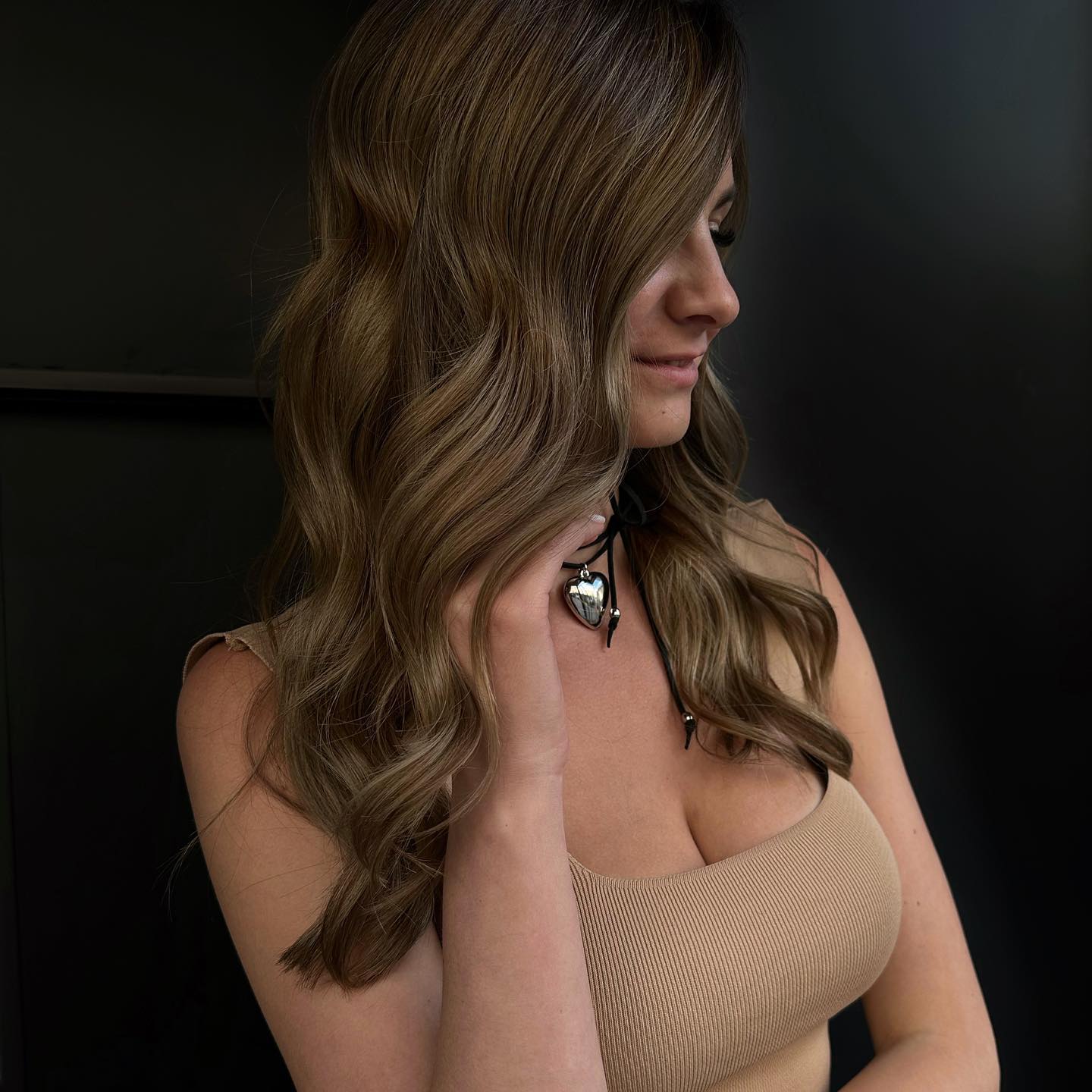
While lightening dark hair, red, copper, orange, or yellow tones can appear. These are natural stages of lifting a dark base. Once most of the pigment has been removed, the colourist assesses the resulting undertone and chooses a toner.
Depending on the starting base, hair condition, and number of stages after black, you can move towards:
- chocolate;
- chestnut;
- caramel;
- copper;
- dark blonde;
- beige;
- warm or cool blonde;
- a complex colour with smooth transitions.
It isn’t always advisable to move straight to a very light blonde. In some cases, the colourist recommends getting a brown, caramel, or dark blonde shade first and then gradually continuing the lightening process.
Gradual Lightening and Toning
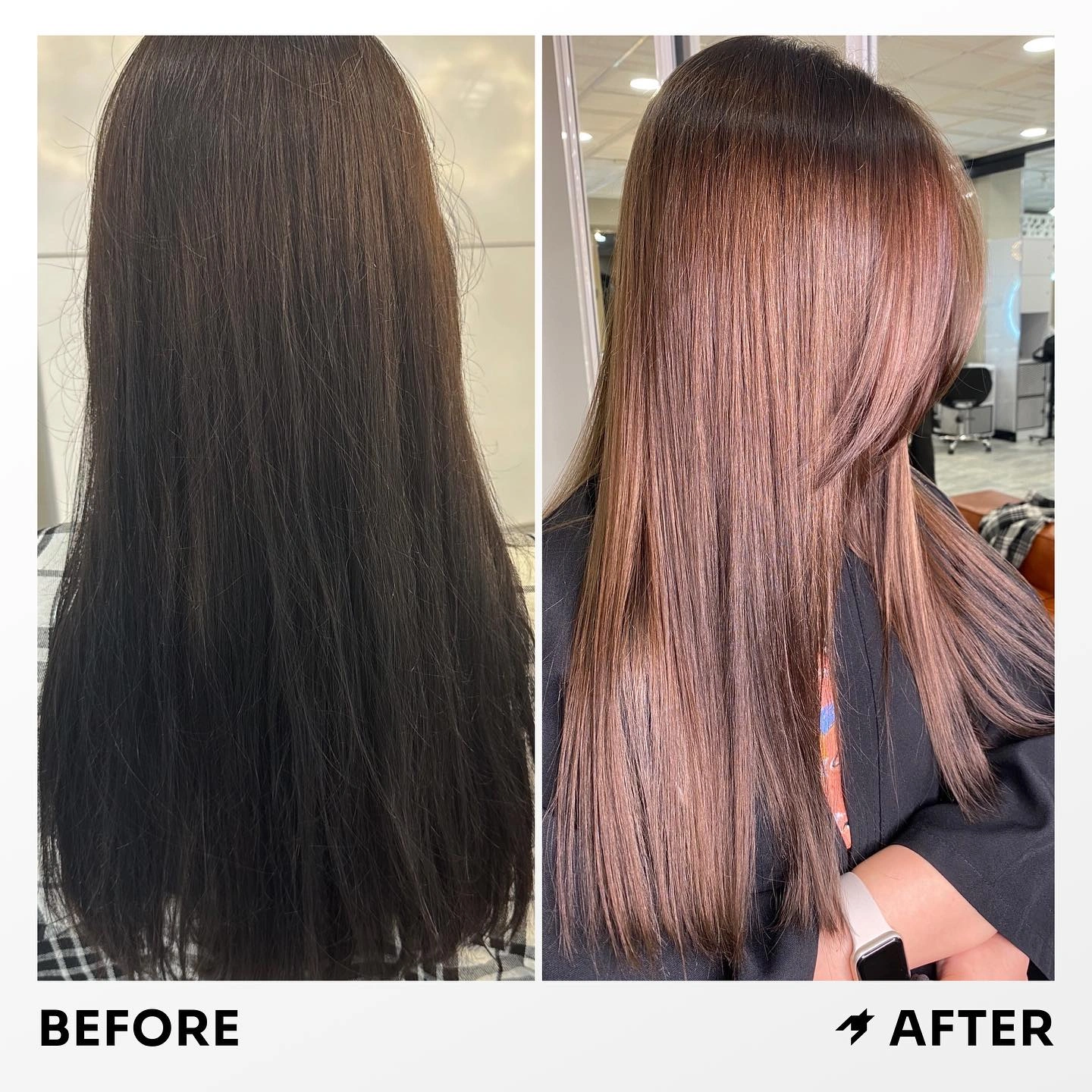
Depending on the hair’s condition, 2–4 stages of lightening with intermediate toning are carried out, since in one sitting hair can realistically only be lightened by a few tones. This helps gradually remove the black pigment and achieve a clean, even shade without harsh transitions.
To stabilise the colour, stylists use professional dyes that work gently, without excessive drying. Toning also helps neutralise unwanted warm undertones and gives the hair a more even, well-groomed look.
Restoring and Protecting the Hair’s Structure
At every stage of lightening, protective systems such as Olaplex, Lebel, or Brae are used to help maintain the hair’s structure. This allows the strands to be lightened while keeping their shine, elasticity, and well-groomed appearance even after several treatments.
Protective and restorative products are chosen based on the hair’s initial condition, its porosity, and the planned intensity of lightening.
How Many Treatments Are Needed to Fully Exit Black Hair Colour
The number of sessions depends on hair type, density, previous colourings, and the desired colour. On average, 2 to 5 treatments are needed, spaced a few weeks apart, to keep the hair healthy. The stylist will determine the exact plan during a consultation so the result looks natural without overloading the hair’s structure.
The exact number of treatments can’t be determined from a photo alone. During an in-person consultation, the colourist assesses pigment density, the condition of the strands, and how realistic the desired result is.
Aftercare Following an Exit From Black Hair Colour
To preserve the colour and shine after the treatment, it’s important to care for your hair properly — both at home and in the salon.
At-Home Care After Lightening
Use sulphate-free shampoos, nourishing masks, and serums. Protect your hair from high temperatures and sun exposure. Apply hydrating products regularly to maintain softness.
Always apply heat protection before blow-drying or using hot styling tools. After lightening, it’s also important to regularly use conditioner and a leave-in treatment for the mid-lengths and ends.
Salon Treatments for Hair Restoration
We recommend restorative treatments every 3–4 weeks, especially if you’re lightening your hair during a very hot or very cold season, when weather has the most damaging effect on hair.
Olaplex, Lebel, and Brae systems help maintain the hair’s structure, enrich it with nourishing ingredients, and restore shine. This extends the effect of the colouring and helps protect the colour from fading quickly.
What Determines the Price of Exiting Black Hair Colour
The price of exiting black hair colour is determined individually, since the complexity, duration, and scope of the treatment can vary significantly.
The cost is influenced by:
- hair length and density;
- the amount of black pigment built up;
- the condition and porosity of the strands;
- the history of previous colourings;
- the number of lightening stages;
- the amount of dye and care products used;
- whether colour correction is needed;
- the chosen final shade;
- how long the colourist’s work takes.
The exact price of exiting black hair colour in Kyiv is determined after a consultation and diagnosis. The stylist will assess the condition of the strands, the scope of work, and suggest the best plan for moving towards the desired shade.