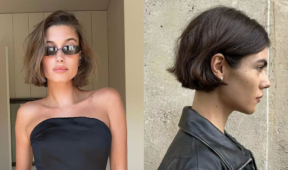
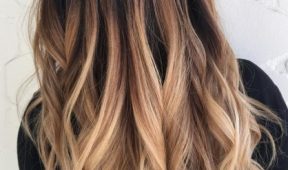
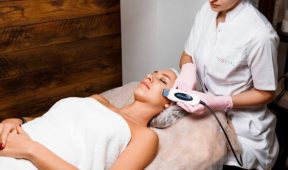
Botox and keratin for hair are often compared because both procedures help make strands smoother, shinier and more manageable. However, their main purpose is different: keratin is mostly chosen to smooth the curl pattern, straighten the hair and simplify daily styling, while Botox helps improve the appearance of dry, porous and damaged lengths, giving them softness and a well-groomed look.
That is why the answer to the question of what is better — Botox or keratin — depends not on the popularity of the procedure, but on the hair structure, the degree of damage and the desired result.
Below, we will look at how each procedure works, who it is suitable for and what should be considered before booking an appointment with a stylist.
What is keratin hair straightening
Keratin straightening is a salon procedure aimed primarily at smoothing the hair, reducing frizz and disciplining unruly strands. A special formula is applied to the lengths, and under the influence of high temperature it is sealed onto the hair, helping to make it more even, smooth and shiny.
The main purpose of the procedure is not to treat the hair, but to change its appearance and simplify daily care. After keratin straightening, the curl becomes less pronounced, the strands are easier to comb, react less to humidity and are quicker to style. Depending on the initial hair structure and the selected formula, the result may vary from light smoothing to almost complete straightening.
Keratin is most often chosen for thick, wavy, curly or porous hair that becomes very frizzy and requires regular use of a flat iron. At the same time, the formula and technique of the procedure must be selected individually, as a formula that is too intensive or an incorrectly chosen temperature regime may not be suitable for fine, lightened or severely damaged hair.
How keratin works on hair
During the procedure, a professional keratin formula is applied to cleansed hair and evenly distributed along the length. After the processing time, the hair is dried, and the active components are sealed with a flat iron. Under the influence of heat, the formula helps smooth the surface of the hair shaft, reduce frizz and make the strands more manageable.
At the same time, the result of the procedure depends not only on the product itself. The structure and initial condition of the hair, the composition and concentration of the product, the correctly selected temperature, the number of passes with the flat iron and adherence to the technique all play an important role. That is why the same procedure can give different levels of smoothing on fine, thick, porous or curly hair.

What effect does keratin straightening give
The result of keratin straightening is noticeable primarily in the appearance and behaviour of the hair. After the procedure:
- the strands become more even and smooth;
- frizz is reduced;
- the curl becomes weaker or is smoothed out;
- the hair reacts less to moisture;
- styling takes less time;
- a noticeable shine and well-groomed appearance appear.
The intensity of the effect depends on the hair structure and expected result: on wavy hair, the procedure gives soft smoothing, while on curly hair it gives more noticeable straightening.
Who keratin is suitable for
Keratin straightening is most often chosen by owners of curly, wavy, thick and unruly hair that is difficult to style and control throughout the day. The procedure is also suitable for porous hair prone to pronounced frizz, especially in high humidity.
Keratin is worth considering if the main goal is to get a long-lasting smoothness effect, make the hair more manageable and reduce the time spent on daily styling. At the same time, the final decision should be made by the stylist after assessing the structure, density and condition of the hair.
Who keratin may not be suitable for
Keratin straightening requires a careful approach if the hair is very fine, lacks natural volume, is severely damaged or prone to breakage. In such cases, the procedure may additionally weigh the strands down or make them look less voluminous. Special care should be taken with recently lightened hair and lengths that do not tolerate high temperatures well.
Keratin is also not worth choosing if you want to preserve natural curls, waves or root volume, because the main action of the procedure is aimed specifically at smoothing and disciplining the hair.
The final decision should be made by the stylist after diagnosis. They assess density, porosity, elasticity, the degree of damage and colouring history to determine whether keratin is suitable specifically for your hair.
How long the keratin effect lasts
On average, the effect of keratin straightening lasts from 3 to 6 months. The exact duration depends on the initial condition and porosity of the hair, the formula used, adherence to the technique and the specifics of home care. The result fades gradually: the hair slowly returns to its natural structure.
The duration of the effect may be shortened by:
- frequent hair washing;
- use of aggressive cleansing products;
- incorrectly selected home care;
- regular swimming in sea or chlorinated water;
- frequent use of a flat iron, curling iron or hair dryer without heat protection;
- intensive sun exposure;
- colouring or other chemical procedures shortly after keratin.
To keep the hair smooth and manageable for longer, it is worth using products recommended by the stylist and protecting the lengths from aggressive external factors.

Advantages and disadvantages of keratin straightening
Keratin straightening gives a noticeable and long-lasting result, but before the procedure it is important to consider not only the expected effect, but also the initial condition of the hair.
Main advantages of keratin:
- noticeable smoothness and smoothing of the curl;
- frizz control even in high humidity;
- easier and faster daily styling;
- long-lasting effect;
- shine, softness and manageability of the hair.
Possible disadvantages of the procedure:
- natural and root volume may decrease;
- heat treatment is required to seal the formula;
- the procedure is not suitable for every hair type and condition;
- correctly selected home care is needed to maintain the result.
To get a predictable result and avoid overloading the hair, the formula and intensity of the procedure should be selected after professional diagnosis.
In PIED-DE-POULE beauty salons, stylists assess the structure, density, porosity and degree of hair damage before the procedure, as well as take into account colouring history and the expected result. This professional approach helps choose the appropriate formula, temperature and technique to achieve noticeable smoothness without unnecessary stress on the hair.
What is hair Botox
Hair Botox is a professional care procedure aimed at improving the external condition of the lengths. A special formula with conditioning, moisturising and nourishing components is applied to the hair, helping to smooth the surface of the hair shaft, reduce dryness and frizz.
After the procedure, the hair looks smoother, softer, shinier and visually denser. The strands are easier to comb, become more manageable, and porous or damaged lengths acquire a neater and more well-groomed appearance. At the same time, Botox does not necessarily straighten the hair completely: depending on the formula and technique, it can preserve the natural wave and volume.
It is important to understand that hair Botox is a cosmetic procedure, not a treatment method. It improves the appearance and properties of the lengths, but does not affect hair follicles, does not eliminate the causes of hair loss and does not replace a doctor’s consultation if the hair has started falling out intensively.
How hair Botox works
During the procedure, a professional formula is applied to cleansed hair and evenly distributed along the length. The product formula may contain amino acids, proteins, natural oils, moisturising and conditioning components. They help smooth the surface of the hair shaft, soften the strands, reduce frizz and give the lengths a more well-groomed appearance.
Depending on the selected product, the formula is left on the hair, then rinsed out completely or partially and the result is fixed according to the manufacturer’s protocol. Some protocols use a hair dryer or flat iron, but the temperature and number of passes must be selected with the condition of the hair in mind.
The specific result depends on the product formula, application method, temperature regime, porosity and degree of hair damage. That is why Botox can give different effects: from light softening and shine to noticeable smoothing and visual thickening of the lengths.
What effect does hair Botox give
The result of Botox is noticeable in the appearance and feel of the hair. After the procedure:
- the strands become softer and smoother;
- dryness and frizz are reduced;
- the length looks more well-groomed;
- the hair gains a noticeable shine;
- combing and styling become easier;
- porous and damaged areas look visually denser;
- the natural wave, curl and volume may be preserved.
Botox does not always provide complete straightening. Its main effect is to make the hair more manageable, neat and pleasant to the touch without necessarily changing its natural shape.
Does Botox straighten hair
Hair Botox can slightly smooth the strands, reduce frizz and make the curl less pronounced. However, it usually does not give such a noticeable and long-lasting straightening effect as keratin.
The result depends on the product formula, application technique, temperature regime and initial hair structure. On slightly wavy or porous hair, Botox can give noticeable smoothness, while on thick and tight curls the natural curl is mostly preserved.
Who hair Botox is suitable for
Botox is most often recommended for dry, porous, dull and damaged hair that has lost softness, shine and manageability. The procedure is also worth considering after colouring if the lengths have become rougher, more brittle or prone to frizz.
Botox may be suitable for fine hair when it is important to improve its appearance without noticeable weighing down and complete loss of natural volume. It is also a good option for those who want to make the strands smoother and more well-groomed, while preserving the wave, curl or natural hair texture.
The final choice depends on the condition of the lengths, the degree of damage and the desired result, so it is important to have a professional diagnosis before the procedure.
Who Botox may not be suitable for
Hair Botox may not meet expectations if the main goal is to get perfectly straight strands or to smooth out a pronounced, tight curl for a long time. On very thick and coarse hair, the procedure usually improves softness, shine and manageability, but does not provide the same level of straightening as keratin.
Botox should also not be perceived as a universal solution for severely damaged hair. If the lengths are excessively brittle, have lost elasticity or are damaged after repeated lightening, the stylist may first recommend another professional care programme.
Before the procedure, it is important to agree on the expected result with the stylist. Professional diagnosis will help determine whether Botox will give the desired effect, or whether another procedure would be better suited to the specific condition and structure of the hair.
How long hair Botox lasts
On average, the effect of hair Botox lasts from 1 to 3 months. It is usually less long-lasting than after keratin straightening, and the result gradually weakens: the hair loses its initial smoothness, softness and shine.
The formula may wash out faster and the duration of the effect may be shortened by:
- frequent hair washing;
- use of aggressive cleansing products;
- regular use of a flat iron, curling iron or hair dryer without heat protection;
- incorrectly selected home care;
- colouring or lightening shortly after the procedure;
- frequent contact with salty or chlorinated water.
To make the result last longer, it is worth following the stylist’s recommendations and using products that match the type and condition of the hair.
Advantages and disadvantages of hair Botox
Hair Botox helps improve the external condition of the lengths without necessarily changing the natural shape of the strands. At the same time, before the procedure it is important to consider what exact result you expect.
Main advantages of Botox:
- the hair becomes smoother and softer;
- dry and porous lengths look more well-groomed;
- frizz is reduced;
- natural hair volume and texture may be preserved;
- shine appears, and combing becomes easier;
- the formula can be selected according to the type and condition of the hair.
Possible disadvantages of the procedure:
- Botox does not provide complete straightening of a pronounced curl;
- the effect usually lasts less than after keratin straightening;
- the result largely depends on the product formula and correct technique;
- the procedure improves the appearance of the lengths, but does not eliminate the causes of breakage or hair loss.
In PIED-DE-POULE salons, stylists select the Botox formula individually, taking into account porosity, density, degree of damage and colouring history. This helps achieve a predictable result without unnecessary weighing down of the hair and preserve its natural volume.

How Botox differs from keratin
The main difference between Botox and keratin lies in the primary purpose of the procedures. Keratin is chosen primarily for noticeable smoothing, straightening of the curl pattern and long-lasting frizz control. Botox is more focused on softness, shine, visual thickening and improving the appearance of dry, porous or damaged lengths.
| Criterion | Keratin straightening | Hair Botox |
| Main purpose | Smoothing, straightening and disciplining the hair | Improving the external condition, softness and shine of the lengths |
| Level of straightening | Pronounced: the curl becomes weaker or is almost completely smoothed out | Moderate: frizz is reduced, but the natural shape often remains |
| Effect on natural volume | Volume may noticeably decrease | Natural volume is mostly preserved |
| Result on curly hair | Noticeably smooths waves and curls | Makes curls softer and neater, but does not always straighten them |
| Suitable for which hair types | Thick, curly, wavy, unruly hair and hair prone to frizz | Dry, porous, dull, coloured or visually damaged hair |
| Duration of the effect | On average, from 3 to 6 months | On average, from 1 to 3 months |
| Need for heat treatment | Need for heat treatment | Depends on the protocol: both hot and more delicate techniques are possible |
| Home care | Gentle cleansing, heat protection and products to maintain smoothness are needed | Gentle cleansing, moisturising care and protection of the lengths from drying out are needed |
So, keratin better meets the need for maximally straight, smooth and manageable hair, while Botox is more about softness, shine and a well-groomed look without necessarily losing the natural wave and volume. At the same time, the result depends not only on the name of the procedure, but also on the specific formula, application technique and initial condition of the hair.
What is better — Botox or keratin — for different hair types
The choice between Botox and keratin depends not only on the desired effect, but also on the structure, density and current condition of the hair. The same procedure can give different results on fine, curly, porous or lightened strands, so there is no universal recommendation.
For curly and wavy hair
If the main goal is to smooth the curl as much as possible, reduce volume and get straight hair, keratin straightening is chosen more often. It disciplines the strands, helps control frizz and reduces the time needed for daily styling.
Botox is more suitable for those who want to make curls softer, shinier and more defined, while preserving the natural wave or curl. On pronounced and tight curls, it usually does not give complete straightening.
For frizzy and porous hair
Both procedures can reduce frizz, but the choice depends on the desired result. If the hair reacts strongly to humidity, is difficult to style and needs a long-lasting smoothness effect, it is better to consider keratin.
If it is important to preserve the natural texture and volume while making the lengths softer, shinier and visually denser, Botox is more suitable. For highly porous hair, the stylist should assess the degree of damage, because not every formula and temperature regime will be safe.
For fine hair without volume
For fine hair, Botox is often a more delicate option, especially if it is necessary to reduce dryness and frizz without completely losing volume. A correctly selected formula helps improve the appearance of the lengths and make the strands smoother and more manageable.
Keratin can visually weigh down fine hair and reduce root volume. If the client still wants more pronounced smoothing, the stylist should choose a lighter formula and adapt the technique to the density of the hair shaft.
For dry and brittle hair
For dry, dull and brittle lengths, Botox is more often considered, because its main task is to improve the softness, smoothness and external appearance of the hair. The procedure helps reduce the feeling of roughness and makes porous areas look visually denser.
If the hair is severely damaged, has lost elasticity or breaks along the length, neither procedure should be chosen without preliminary diagnosis. In such a case, the stylist may first recommend a more delicate care programme without intensive heating.
For coloured hair
Both procedures may be suitable for coloured hair. If the lengths are in satisfactory condition but are very frizzy or need smoothing, keratin straightening can be considered.
If after colouring the hair has become dry, dull or coarse, it is more advisable to choose Botox. It is important to consider that some formulas and high temperatures may affect the shade, so the stylist should know when the colouring was done and which products were used.
For lightened hair and blonde
Lightened hair requires an especially careful approach because of increased porosity, dryness and sensitivity to temperature. If the lengths have retained sufficient strength and elasticity, the stylist may choose a delicate Botox treatment aimed at softness, shine and frizz control.
Keratin on blonde hair is not possible in every case. For heavily lightened, brittle or weakened hair, intensive heat treatment may be undesirable. The decision is made only after testing a strand and assessing the degree of damage.
For thick and coarse hair
For thick, coarse and unruly hair that is difficult to style, keratin usually gives a more noticeable result. It helps reduce excessive volume, smooth the curl and make the strands more manageable.
Botox is worth choosing if the main goal is to give the hair softness and shine without straightening it completely. On a very thick and coarse structure, the smoothing effect will be less noticeable and less long-lasting than after keratin.
The most accurate way to determine what is better for the hair — Botox or keratin — is only after professional diagnosis. PIED-DE-POULE stylists assess the structure, porosity, elasticity, colouring history and expected result, and only then select the procedure, formula and technique.
Botox or keratin: what to choose depending on the desired result
To determine what is better — Botox or keratin — it is worth focusing primarily on the desired result. Both procedures improve the appearance of the hair, but they solve different tasks.
- You need noticeable straightening and smoothness — choose keratin.
- You want to reduce frizz but preserve the natural wave or volume — Botox is a better fit.
- You need to reduce the time spent on daily styling — it is worth considering keratin straightening.
- You need to improve the appearance of dry, porous and dull lengths — Botox is the more appropriate choice.
- The hair is severely damaged, brittle or recently lightened — professional diagnosis is needed first.
It is important to consider not only the desired effect, but also the structure, density, porosity and history of procedures. A stylist will help determine which option will give a predictable result and will not create unnecessary stress on the hair.
Can Botox or keratin damage the hair
Botox and keratin should not worsen the condition of the hair if the procedure is correctly selected and performed according to the technique. At the same time, the risk of dryness, breakage or loss of elasticity increases when the formula or temperature regime does not match the initial condition of the lengths.
The safety of the procedure and the final result are influenced by:
- the condition of the hair before the procedure — heavily lightened, brittle or weakened lengths require an especially delicate approach;
- the product formula — formulas differ in intensity of action and must be selected according to the structure and porosity of the hair;
- flat iron temperature — a temperature that is too high can dry out or damage sensitive strands;
- the number of passes over each strand — excessive heat treatment creates additional stress on the hair;
- adherence to the technique — correct application, processing time, rinsing and sealing of the formula are important;
- the stylist’s qualification — the specialist must correctly assess the condition of the hair and adapt the procedure protocol;
- previous procedures — lightening, colouring, perming or previously performed straightening can affect the hair’s reaction.
Severely damaged, recently lightened or breakage-prone hair requires particular caution. Before the procedure, the stylist may carry out a diagnosis and, if necessary, a strand test.
How to care for hair after Botox and keratin
Correctly selected home care helps maintain smoothness, shine and manageability of the hair for longer after the procedure. Recommendations may differ depending on the formula used, so first of all it is worth following the stylist’s instructions.
Care after keratin
After keratin straightening, it is important not to speed up the washing out of the formula and to protect the lengths from drying out. For this, it is recommended to:
- use a gentle shampoo selected according to the stylist’s recommendations;
- apply conditioner or a mask to the lengths after each wash;
- use heat protection before blow-drying, straightening or styling;
- avoid overusing high temperatures;
- protect the hair from prolonged sun exposure;
- apply a protective leave-in product before visiting a pool or swimming in the sea;
- avoid colouring or lightening immediately after the procedure without consulting the stylist.
Some modern keratin formulas allow the hair to be washed immediately after the procedure, while others require a certain amount of time for the result to stabilise. Therefore, there is no universal rule regarding the first wash — the exact timing should be given by the stylist who performed the procedure.
Care after Botox
After Botox, the main task of home care is to maintain softness, moisture and a well-groomed look of the lengths. It is recommended to:
- choose a gentle shampoo without overly aggressive cleansing;
- regularly use conditioner or a moisturising mask;
- apply leave-in creams, serums or oils to the ends;
- use heat protection before hot styling;
- avoid using a flat iron or curling iron too often;
- avoid colouring and lightening shortly after the procedure;
- protect the hair from chlorinated and salty water.
It is not worth overloading the hair with a large amount of rich oils or dense masks, especially if it is fine. Care that is too heavy can deprive the strands of volume, so products are best selected according to the structure, porosity and condition of the lengths.
Why the procedure should be selected by a stylist
The choice between Botox and keratin should not be made only based on result photos or general recommendations. The same procedure can affect hair differently depending on its structure, current condition, previous colouring and the formula used. That is why professional diagnosis is needed before the procedure.
During the consultation, the stylist assesses:
- porosity — how quickly the hair absorbs and loses moisture;
- elasticity — whether the hair can stretch without breaking;
- density — the overall thickness and amount of hair;
- hair shaft thickness — fine, medium or coarse hair;
- degree of damage — the presence of dryness, breakage, split and weakened areas;
- colouring and lightening history — when and with which products the procedures were carried out;
- previous salon procedures — keratin, Botox, perming, reconstruction or other types of chemical impact;
- desired result — complete straightening, frizz reduction, preservation of curl, volume or improvement of the appearance of the lengths.
Based on the diagnosis, the specialist determines whether Botox or keratin is suitable for the hair, and selects the formula, temperature and technique. If necessary, the stylist may recommend another care programme first or postpone the procedure in order not to create additional stress on weakened lengths.
In the PIED-DE-POULE beauty salon network, stylists work individually with each client: they analyse the condition of the hair, take procedure history into account and help form realistic expectations. This approach makes it possible to achieve a predictable result, preserve hair quality and choose a procedure according to its real needs.
Botox or keratin at PIED-DE-POULE: how to choose the procedure
You do not have to determine on your own what will suit your hair better — Botox or keratin. During a consultation, a PIED-DE-POULE stylist will assess the structure, porosity, density and degree of hair damage, clarify colouring history and previous procedures, and also discuss the desired result.
Based on the diagnosis, the specialist will select the appropriate procedure, formula and technique. If Botox or keratin is not suitable for the hair, the stylist will suggest another type of professional care that matches its current condition and needs.
Book online at a convenient time at the nearest PIED-DE-POULE salon to receive a personalised recommendation and a predictable result without unnecessary experiments with your hair.