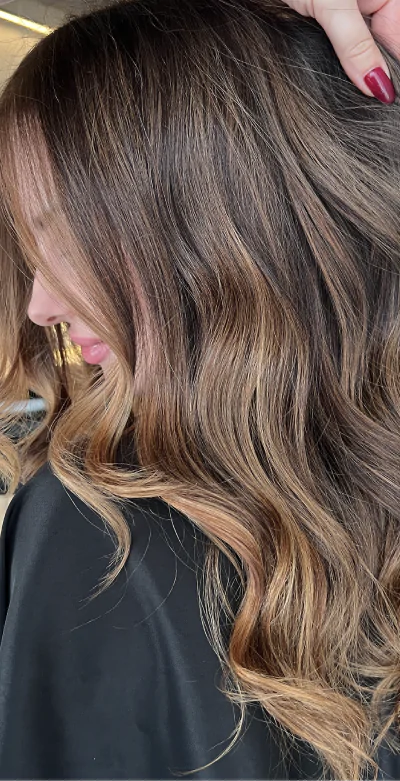
Modern hair coloring techniques allow you to get the most natural effect – as if the color has faded in the sun. But when it comes to choosing, many people are lost: airbrushing, balayage or shatush – what’s the difference and which is better for you?
At first glance, these techniques may indeed seem similar. However, they differ in the way they are lightened, the smoothness of the color transition, how noticeable the result will be, the frequency of correction, and how they look on different hair lengths and textures.
In this article, we break down each technique in simple terms, compare them, and give a clear answer on which one to choose depending on your hair type, desired result, and willingness to take care of it.
And if after reading this you want to choose a technique together with a master, in a network of beauty salonsHoundstoothYou can get a consultation before dyeing and choose an option that really suits your hair.
What is complex hair coloring?
Complex coloring is a technique in which not all of the hair is lightened, but only individual strands. This creates the effect of depth, volume, and a natural color transition without sharp boundaries.
Unlike classic one-tone dyeing, such techniques look more natural, retain a neat appearance longer, and do not require frequent updates. That is why complex hair coloring is often chosen by those who want to refresh their look, add visual thickness to their hair, and get softer regrowth without a clear border at the roots.
The most popular types of complex coloring include:
- airtouch
- balayage
- shatush
Each of these techniques produces different results, so it is important to understand their differences before booking the procedure.
A complex coloring technique is selected not only by name or reference, but also by the hair base, the condition of the length, and the effect you want to achieve as a result.
What is Airtouch?
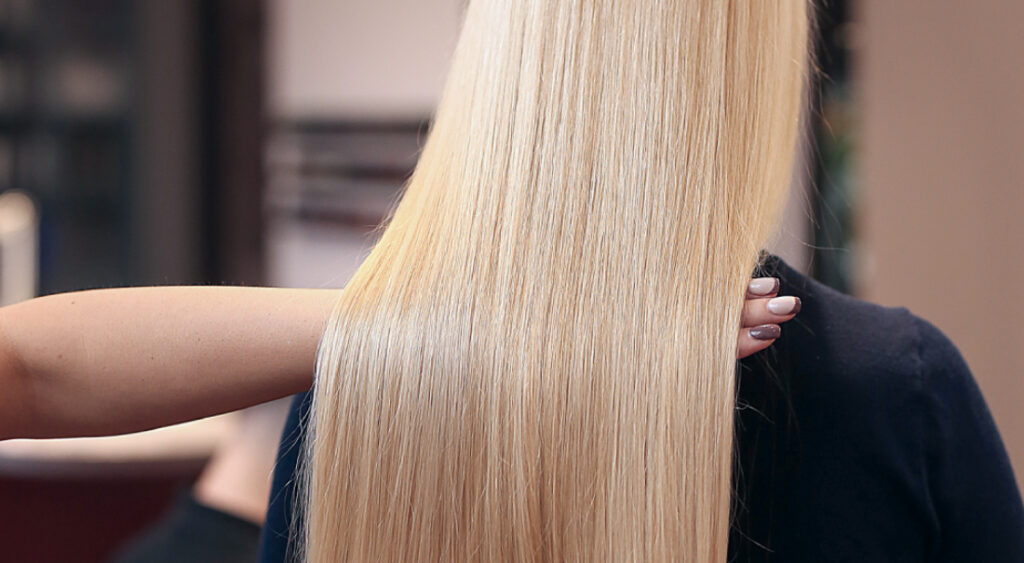
Airtouch — is a dyeing technique in which strands are separated using a stream of air from a hair dryer. The master “blows out” short and weak hairs, and applies the dye only to the remaining ones.
This achieves the smoothest and softest color transition without sharp lines. That is why airtouch is often chosen by those who want a natural blonde, delicate lightening or complex coloring with the softest possible regrowth.
Main features of airtouch technology:
- the most natural effect without streaks
- smooth gradient from roots to ends
- lightens up to 70% of hair
- the result looks “airy” and glossy
- visually adds volume to hair
- refreshes the image without a sharp change in color
This coloring is suitable for those who want the most natural result without sharp contrasts, as well as for those who are not ready to update the color often. Airtouch can work well on different hair lengths, but it is especially beautiful on medium and long lengths, where a soft stretch of color is visible.
The result is average.4–6 months, and sometimes longer. The duration of the effect depends on the base, home care, frequency of tinting and previous coloring.

What is Balayage?
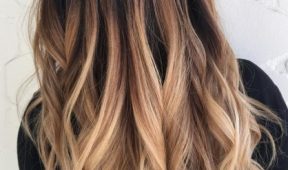
Balayage — is a coloring technique in which the dye is applied by hand with light “sweeping” movements. This creates the effect of sun-bleached hair.
During dyeing, the master creates soft color transitions along the length, and after lightening, the strands are tinted if necessary so that the result looks as natural and harmonious as possible.
Coloring is done in an open way, without foil, which gives a softer and more natural result. Balayage is a good option for those who want to refresh the color, add light and shade contrast to their hair, and get a natural effect without clear graphics.
Main features of the balayage technique:
- approximately 40–60% of hair is lightened
- emphasis on the top layer
- soft color transitions
- natural burnout effect
- gives hair depth and visual volume
- grows back softly and without a sharp edge
- looks good on hair of different lengths
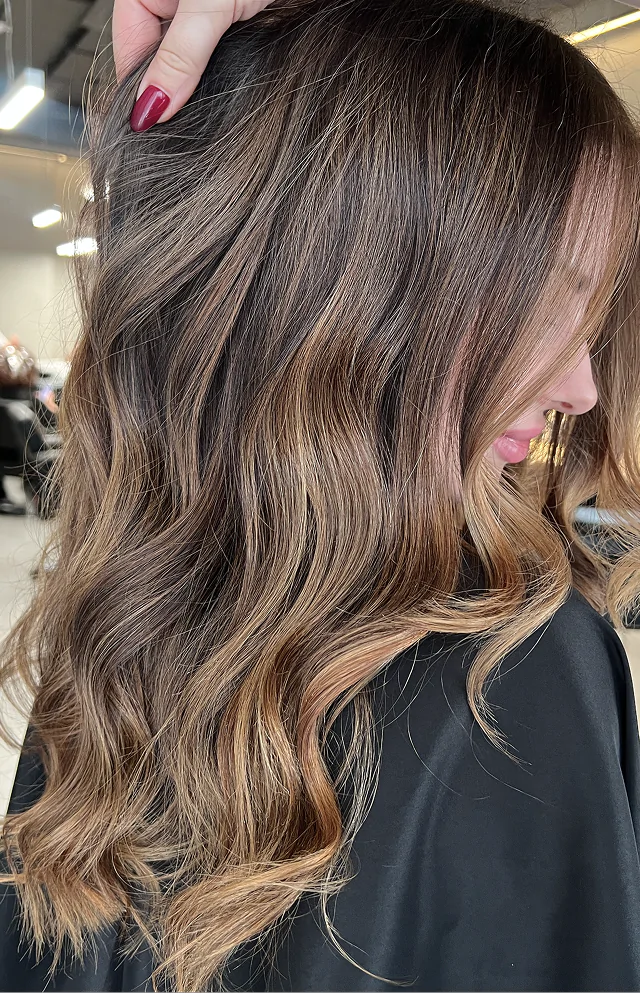
Balayage is a great option for those who want a subtle color update without a drastic change. This technique looks especially great on wavy or textured hair, but it also looks great on straight hair of all lengths.
Balayage works best when you want to add depth, movement, and visual volume to your hair without going all-out. If you like a soft, sunny effect and a less graphic result, balayage is often a great choice.

What is Shatush?
Shatush is a dyeing technique using a comb. The master combs the strands at the roots and applies the dye along the length, creating a natural gradient.
This approach allows you to get the effect of gently sun-bleached strands and a natural, fresh look without a clear color border. Shatush is suitable for those who want a natural, but slightly more expressive result than with more delicate coloring techniques.
The main features of the shatush technique:
- more contrast result than airtouch
- natural effect of burnt ends
- lighting mainly along the length
- faster technique in execution
- helps to gently mask the first gray hair
- makes regrowth less noticeable
Shatush is a good option for those who want noticeable lightening without sharp transitions and clear stripes. At the same time, it is important to take into account the condition of the hair: on thin, severely damaged or very brittle hair, it is better to choose the technique individually.
This technique works best on medium and longer hair, while on very short haircuts its effect can be almost invisible.
The result is close3–5 months, but this term also depends on the base, care and frequency of tinting.
What is the difference between Airtouch, Balayage and Shatush?
The difference between these techniques lies not only in the method of applying the dye, but also in the smoothness of the transition, the level of contrast, and the overall visual effect. For convenience, let’s compare them according to the main criteria.
| Criterion | Airtouch | Balayage | Shatush |
| Machinery | separating strands with a hairdryer | manual application of dye | pile and application to length |
| Smooth transition | maximum | soft | soft but more noticeable |
| Contrast | minimum | average | more pronounced |
| Lighting | up to 70% hair | approximately 40–60% | mainly length and ends |
| Visual effect | “airy”, glossy, delicate | natural burnout, soft relief | more noticeable light accent, natural effect on the length |
| Correction frequency | less often | average | more often |
| Who is suitable for? | for those who want the most natural result | for those who want to gently refresh their color | for those who want a more noticeable effect |
| What hair type does it look especially good on? | medium to long length, straight or slightly wavy hair | wavy, textured, medium and long length | medium and long length, when a more expressive light accent is needed |
| Care after dyeing | important care and tinting | important care to preserve the shade | It is important to take care of the length and ends. |
What to choose: a quick guide
In short:
- choose air conditioner if you want the most natural effect, smooth transition and more fluid correction
- choose balayage if you want a light color refresh, soft highlights and a natural burnt-out effect
- choose hurry, if you want more noticeable lighting, a more pronounced emphasis on length and a natural light effect
You can also focus on practical criteria:
- if you want to update the color less often – choose more often airtouch
- if visual volume and a soft play of light on the hair are important, it is worth considering balayage
- if you need the most natural result without a clear boundary, you usually pay attention to airtouch
- if you want a more noticeable light accent on the length – often suitable shatush
There is another important point: you should not always choose a technique based only on a photo from Pinterest or Instagram. If your hair has previously been dyed dark, has damaged length, uneven base or first gray hair, the result may differ from the reference. In such cases, a preliminary consultation helps to understand which technique is really suitable and what effect will be realistic for your hair.
From a practical perspective, the choice depends not only on the name of the technique, but also on your base, hair condition, previous coloring, and desired shade. The same technique can look completely different on different hair.
If in doubt, the best solution is to consult with a colorist who will select the technique for your hair type and desired result, not just for a beautiful reference picture.
How to choose a technique based on your hair type
The choice depends not only on the desired result, but also on your initial data.
For fine hair:
- airtouch is often a good fit
- the technique gives a delicate effect and soft regrowth
- the final choice depends on the condition of the hair
For thick hair:
- balayage or airtouch is suitable
- such techniques help create depth and visual volume
- The color transitions are especially beautiful on thick hair.
For dark hair:
- airtouch or shatush often give a beautiful result
- allow for a soft transition to light shades
- if the base is dark or has previously been painted dark, the lighting scheme is selected individually
For blonde hair:
- all three techniques can work well
- the choice depends on whether you want the softest possible result or a more expressive one
For short hair:
- balayage or light airtouch
- it is important to consider the length so that the transition looks natural
For wavy and textured hair:
- balayage often looks particularly impressive
- color transitions become more noticeable in movement and styling
For hair with first gray hair:
- airtouch can be a good solution in some cases
- It is better to choose the technique and lighting density after consultation.
Pros and cons of each technique
Each dyeing technique has its own strengths and specifics. To choose the option that is truly right for you, it is important to consider not only the desired effect, but also the condition of the hair, the base and subsequent care.
Airtouch
Advantages:
- the most natural result
- lasts a long time
- soft regrowth without a sharp edge
- well suited for those who want a delicate effect
Possible nuances:
- complicated and lengthy procedure
- requires the experience of a craftsman
- the cost is usually higher than in simpler techniques
Balayage
Advantages:
- versatility
- soft and natural effect
- helps refresh the look without a drastic change in color
- looks beautiful on textured hair
Possible nuances:
- without styling or texture, the highlights may look less pronounced
- the result depends a lot on the application technique and the initial hair base
Shatush
Advantages:
- faster execution
- gives a noticeable but natural effect
- well suited for those who want a lighter accent on the length
Possible nuances:
- pile may not be the best option for thin or weakened hair
- the smoothness of the transition is usually less “airy” than in airtouch
How long does the result last?
The duration depends on the technique and care:
- airtouch — 4–6 months
- balayage — 3–5 months
- shatush — 3–4 months
Thanks to smooth transitions, regrowth looks natural, so there is no need to dye your hair often. At the same time, the durability of the result is affected by home care, the use of products for colored hair, the frequency of tinting, the intensity of lightening and the initial base.
To keep your color looking beautiful for longer, it’s important to maintain it with proper post-dye care. This is especially true for bleached lengths, which require delicate cleansing, moisturizing, and products to preserve the shade.
What does the price of painting depend on?
The cost of complex staining depends on several factors:
- hair length and thickness
- complexity of the technique
- amount of materials used
- master’s experience
- hair base
- the presence of previous coloring, especially dark pigments
- the need for additional tinting or care
Airtouch is usually the most expensive option, as it requires more time, high skill, and very precise processing of the strands. But the final cost always depends on the specific request and the condition of the hair.
That is why, before complex coloring, it is important to evaluate not only the desired shade, but also the base from which the work begins. In complex cases, a preliminary consultation helps to more accurately understand the scope of the work, the possible result and the format of care after the procedure.