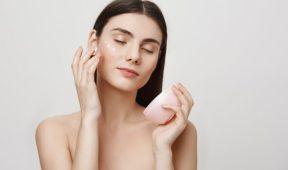
Facial peeling is not a trend or an “optional” step in skincare, but a fundamental procedure without which it is difficult to maintain healthy-looking skin. Over time, the natural cell renewal process slows down, a layer of dead skin cells accumulates on the surface, and even high-quality skincare products become less effective. In such cases, professional peeling becomes necessary.
At PIED-DE-POULE, we consider peeling to be part of a well-thought-out skincare approach, where balance, comfort, and predictable results matter more than quick, short-term effects.
What Is Facial Peeling
Facial peeling is a cosmetic procedure aimed at the controlled removal of dead skin cells and supporting the skin’s natural renewal process. Under normal conditions, the skin renews itself, but over time this process may become irregular.
Peeling is not an aggressive intervention and not “deep cleansing until squeaky clean.” It is a gentle procedure that helps the skin get rid of excess dead cells without disrupting its natural balance. As a result, skin texture becomes smoother, skin tone improves, and the effectiveness of subsequent skincare increases.
Unlike daily cleansing, peeling does not replace basic skincare steps but complements them, creating optimal conditions for maintaining skin quality. That is why facial peeling is considered a basic procedure in professional skincare.
At PIED-DE-POULE, peeling is selected individually, taking into account skin type, condition, and sensitivity.
In practice, peeling is a procedure after which the skin looks smoother, fresher, and more well-groomed.
It is not about drastic changes, but about comfortable renewal that is noticeable even after the first visit.
How Facial Peeling Works
Facial peeling works through the principle of controlled exfoliation of the skin’s surface layer. During the procedure, active ingredients or enzymes act on dead epidermal cells, helping the skin properly shed them.
As a result, peeling:
- removes excess dead skin cells;
- evens out the skin surface and texture;
- improves skin tone and overall appearance;
- increases the effectiveness of subsequent skincare;
- supports natural skin renewal processes.
After the procedure, the skin surface becomes smoother, and metabolic processes become more active. The skin responds better to hydration and regeneration without being overloaded.
Importantly, professional peeling works within the skin’s natural capabilities, without artificially accelerating processes.
How Facial Peeling Is Performed in the Salon
At the PIED-DE-POULE salon, the peeling procedure is carried out step by step:
- assessment of the skin condition by a cosmetologist;
- cleansing and preparation of the skin;
- application of the selected peeling with controlled exposure time;
- neutralization and soothing of the skin;
- final skincare.
This approach allows achieving visible results without overloading the skin and maintaining comfort.
Is Facial Peeling Harmful?
Facial peeling is not a harmful procedure when properly selected and performed. In professional skincare, it is considered a controlled impact on the superficial layer of the skin rather than an aggressive intervention.
Negative reactions are most often associated with mistakes in approach, such as excessive frequency or an unsuitable type of peeling. That is why the procedure requires a preliminary assessment of the skin condition.
At PIED-DE-POULE, we follow the principles of moderation and an individual approach.
Most questions arise at the stage of choosing the procedure. In the beauty salon, a cosmetologist evaluates the skin condition and selects a peeling based on sensitivity, previous skincare, and the desired result.
Why Facial Peeling Is Necessary
Facial peeling is performed not for an instant effect, but as part of long-term skincare. Its main purpose is to maintain stable skin quality and prevent gradual changes.
Regularly selected peeling helps to:
- improve skin texture and reduce unevenness;
- make the complexion more even and fresh;
- maintain pore cleanliness and reduce their visibility;
- reduce the appearance of pigmentation and post-inflammatory marks;
- provide visible renewal without aggressive impact.
This is exactly the result expected by PIED-DE-POULE clients — not drastic changes, but the feeling of well-cared-for, balanced skin.
In addition, peeling increases the effectiveness of subsequent skincare, allowing for more stable results over time.
When Is the Best Time to Do Facial Peeling?
The optimal time for peeling is determined by the skin condition and the type of procedure, not only by the season. In a professional approach, the key factors are the skin’s readiness for renewal and the ability to provide proper aftercare.
More intensive peels are usually planned during periods with less external environmental impact. Gentle and superficial peels can be performed throughout the year, provided that specialist recommendations are followed.
How Often Can Facial Peeling Be Done?
The frequency of peeling depends on:
- the type of procedure;
- the skin type;
- the individual skin reaction.
The optimal schedule is determined together with a specialist to maintain a balance between renewal and skin comfort.
Facial Peels at the PIED-DE-POULE Beauty Salon
At PIED-DE-POULE, we offer professional facial peels selected individually based on skin type, condition, and skincare goals. We work with procedures of varying intensity, allowing us to combine effective skin renewal with comfortable recovery without overload.
Jalupro Glow Peel — Superficial Biorevitalizing Peel
Used when the main goal is to improve skin quality, even out skin tone, and give the face a fresh appearance. Suitable for normal, dry, and combination skin, including cases of dehydration or loss of radiance. Often chosen when a well-groomed look is desired without a long recovery period.
Azelaic and Mandelic Peels — Superficial Acid Peels
Gentle acid peels used for sensitive, combination, or reactive skin. Suitable for addressing uneven tone, texture, and occasional inflammatory elements while maintaining skin comfort. Can be used as part of regular skincare.
Ferulic Peel with Retinol — Superficial-to-Medium Peel
A procedure for more intensive skin renewal, focusing on skin density and overall condition. Recommended for skin with reduced tone, uneven relief, or age-related changes. Selected individually, considering the skin’s readiness for more active impact.
MCA 35 Peel — Medium Acid Peel
A medium-intensity peel used for controlled renewal and smoothing of the skin relief. Suitable in cases where more noticeable texture correction is required, with a predictable recovery period. Recommended for skin that adapts well to active cosmetic procedures.
PRX-T33 Peel — Non-Injection Peel with Biostimulating Effect
A procedure that combines skin surface renewal with minimal downtime. Often chosen when a well-groomed appearance is needed without pronounced peeling. Suitable for various skin types, especially when recovery time is limited.
APPeex Peel — Superficial Gentle Peel
A modern peel for mild skin renewal without aggressive impact. Used when the skin needs supportive care or is in a sensitive state. Often included as part of regular skincare programs.
Each of these peels has its own indications and features. At PIED-DE-POULE, the choice of procedure is made after an individual consultation with a cosmetologist, allowing the selection of the optimal solution for your skin. This approach ensures predictable results and maintains a healthy-looking complexion without overload.
Post-Peeling Care and Recommendations
Professional peeling is only part of a comprehensive skincare routine. Proper post-procedure care is equally important, as it helps to reinforce results and maintain skin comfort.
After peeling, the skin may become more sensitive, so during this period it is recommended to follow simple but important guidelines:
- use moisturizing and soothing products selected by a cosmetologist according to the skin condition;
- avoid aggressive active ingredients in home care during the first days after the procedure;
- обязательно apply SPF products during daytime skincare regardless of the season;
- refrain from visiting saunas, swimming pools, and engaging in intense physical activity for several days;
- do not combine peeling with other active cosmetic procedures without prior consultation.
It is important to remember that skin reactions after peeling are individual. That is why at PIED-DE-POULE, a cosmetologist always provides personalized recommendations based on skin type and the selected procedure.
Following these recommendations allows the skin to recover naturally, without overload, and maintain a smooth, well-groomed appearance in the long term.