Pixie is one of those haircuts that can look completely different on two people. In one case, it can be a very short, graphic style with exposed temples, while in another, it can be a softer haircut with long bangs, root volume, and strands that can be tucked behind the ears. That is why whether a pixie will suit you depends on your face shape and hair type.
In 2026, short styles are once again prominent among the main hair trends: Vogue calls the pixie one of the iconic haircuts that constantly receives new interpretations, while the bixie — an intermediate style between a pixie and a bob — has attracted particular attention this year.
In this article, we will help you find the right length, proportions, and texture among this group of short haircuts, which can be adapted to virtually anyone.
What Is a Pixie Haircut
A classic pixie is a short women’s haircut in which the hair at the back and temples is usually shorter, while the top is left longer. This makes it possible to control the silhouette: add height, create a sleek shape, introduce texture, or leave long bangs.
The main feature of a pixie is its open contours. Compared with long hair, the haircut reveals the neck, jawline, cheekbones, eyebrows, and overall facial proportions more clearly. But this does not mean that you need “perfect” features for it. The stylist’s task is precisely to balance the proportions through the length and direction of the strands.
Among women’s haircuts, the pixie has one of the widest ranges of variations: from just a few centimetres in length to a style that is almost a bob.
Who Does a Pixie Haircut Suit
A pixie can be adapted to practically any face shape and many hair types. The limitations are more often related to how your hair behaves and how often you are willing to maintain the shape.
For example, a very short pixie requires more regular trimming but can take only a few minutes to style. A longer version allows for more experimentation, although it may sometimes require a hairdryer and styling products to make the strands fall as intended.
By Face Shape
There are no strict limitations for a pixie — there are only different variations of the shape that should be selected to highlight certain facial features.
| Face shape | Pixie style that may suit you | What to pay attention to |
| Oval | Classic, short, textured, asymmetrical | You can experiment with length and keep the face open |
| Round | Pixie with volume on top, asymmetry, long side-swept bangs | It is better not to create extra volume directly at cheek level |
| Square | Textured or elongated pixie, soft bangs | Uneven strands soften the geometry of the lower part of the face |
| Rectangular | Elongated pixie or pixie bob | Too much height at the crown can make the proportions appear even longer |
| Heart-shaped | Pixie with bangs, volume at the temples or back of the head | It is important to balance a wider forehead and a narrow chin |
| Diamond-shaped | Long bangs, soft texture around the temples | You can emphasise the cheekbones without making the upper part of the style look too narrow |
When choosing the shape, the specific proportions matter even more than the name of the face type. Two women with what would generally be called round faces may need different bang lengths, different crown heights, and completely different temple shapes.
That is why before getting a haircut, it is worth showing your stylist a reference of a style you like and discussing exactly what you want to take from it: the length, volume, exposed ears, the type of bangs, or the overall texture.
By Hair Type
Hair structure affects a pixie just as much as face shape. The same haircut pattern will behave differently on fine straight hair and thick wavy strands.
| Hair type | Recommended technique / shape | What it does |
| Fine | Graduation and texture without excessive thinning | Helps maintain visual density |
| Thick | Layered haircut, internal weight removal | Reduces excess bulk and makes the silhouette more flexible |
| Straight | Classic, graphic, asymmetrical pixie | Shows the precision of the lines clearly |
| Wavy | Elongated or textured pixie | Natural waves create volume on their own |
| Curly | Pixie with sufficient length on top | Allows the curl to form naturally instead of fighting against it |
| Unruly, with cowlicks | Individual length based on the direction of hair growth | Helps the haircut hold its shape better without constant fixing |
For fine hair, it is especially important not to overdo the texturising. If the strands are thinned too much, the haircut may lose density. Thick hair has the opposite issue: without reducing the internal weight, the shape can sometimes become too heavy.
Is a Pixie Suitable After 40 or 50
Yes. Age itself is not a criterion for choosing hair length. Moreover, a pixie can be very convenient after 40 or 50 if you want a defined shape and a hairstyle that does not require complicated daily styling.
Soft textures, slightly longer hair around the face, and movable bangs often look more delicate than very rigid geometry. At the same time, a short minimalist shape can also work beautifully if it suits the person’s facial features and personal style.
So after 40 or 50, it is better to choose not a haircut based on age, but the version of the pixie that makes your face and hair look harmonious.

The Most Popular Types of Pixie Haircuts
The difference between modern pixie styles may be just a few centimetres, but those centimetres can completely change the character of the haircut.
Classic Pixie
Short temples and back, a slightly longer top, and a neat silhouette. This is the most recognisable version.
It can be worn sleek or slightly tousled. A classic pixie works well for those who are genuinely ready for short hair and do not plan to constantly cover their ears or neck with strands.
Long Pixie
A longer pixie leaves more hair at the crown, around the face, and often in the bang area. It is softer than the classic version and offers more styling options.
The strands can be swept back or to the side, styled with volume, or given a slight wave. It is also a good transitional option for someone who wants short hair but is not yet ready for a style that is only a few centimetres long.
Sometimes a pixie haircut for medium-length hair actually refers to a longer pixie or a pixie bob, since the classic pixie still belongs to the category of short haircuts.
Pixie Bob
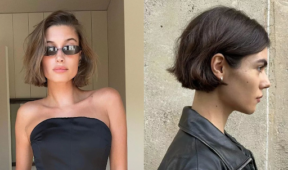
A pixie bob combines the openness of a pixie with the greater length of a bob. The crown and front strands are longer, the outline is softer, and the hair can often be tucked behind the ears.
In 2026, the closely related bixie is also experiencing a noticeable rise in popularity. Vogue explains its appeal through the combination of the structure of a pixie with the softness and layering of a bob.
A pixie bob is especially convenient if you want a shorter hairstyle but still value the ability to change your styling.
Asymmetrical Pixie
Here, one side or the bangs are noticeably longer. Asymmetry allows you to alter facial proportions without adding significant volume and makes even a fairly classic short shape look more interesting.
The degree of asymmetry can vary from a barely noticeable difference to long side-swept bangs combined with a very short temple.
Textured Pixie
Its main feature is clearly defined, movable strands. This shape works particularly well on hair with a natural wave or sufficient density.
However, texture does not necessarily mean a messy hairstyle. Depending on the styling, the haircut can look calm and polished or more casual.
Pixie with Long Bangs
A good compromise for a first short haircut. The back can be short, while the front strands retain enough length to change the parting, reveal or partially cover the forehead. The bangs often determine how soft the pixie looks around the face.
Pixie with Shaved Temples
The most contrasting version. The temples can be cut very short or partially shaved, while the top remains longer.
This option highlights the shape of the head more strongly and loses its crisp outline relatively quickly as the hair grows out. That is why it needs to be corrected more often than a longer pixie.
Which Bangs to Choose for a Pixie
Bangs in a pixie are not just a detail but one of the main tools for working with facial proportions.
- Long side-swept bangs add asymmetry and make it possible to partially cover the forehead. They can easily be changed: swept to the side, lifted, or brushed back.
- Short graphic bangs open up the face more. They work well with expressive short shapes but require a precise line.
- Textured bangs look softer and complement a more relaxed style.
- Longer straight or curtain-style bangs are more common in pixie bobs and bixies, where there is enough length for movement.
Short pixie haircuts with bangs can also be adapted when the hair has cowlicks. However, the stylist needs to take their position into account during the haircut instead of trying to fight them with a hairdryer every morning.
How to Style a Pixie Haircut
Styling a pixie can take three minutes or require a full blow-dry — it all depends on the chosen shape.
For basic at-home styling:
- after washing, blot the hair with a towel instead of rubbing it;
- apply heat protection if you use a hairdryer;
- dry the hair in the direction in which you want the finished shape to sit;
- for root volume, lift the hair with your fingers or a small brush;
- create texture with a small amount of paste, cream, or wax;
- if you want movement in longer bangs, shape them with a round brush or styler;
- use hairspray only where additional hold is actually needed.
A simple rule applies here: the shorter the hair, the more noticeable excess styling product becomes. Start with a small amount and add more only if necessary.
You also do not have to style a pixie the same way every day. The same longer haircut can be worn sleek with a side part, textured, with volume at the top, or with the front strands brushed away from the face.
How to Care for a Short Haircut
Short hair changes the priorities in hair care. With long hair, dry ends are usually more noticeable, while with a pixie, the shape, scalp condition, shine, and texture of the strands come to the forefront. Because of the shorter length, the hair also comes into contact with styling products more quickly and may need to be washed more often.
For a consistent result, it is worth:
- using a shampoo suitable for the condition of your scalp;
- not skipping conditioner simply because your hair is short;
- controlling the amount of wax, paste, and dry texturising products;
- using heat protection before hot styling;
- not waiting until the haircut completely loses its shape;
- occasionally adding professional hair care if the hair is bleached, porous, dry, or regularly exposed to hot styling.
A classic short pixie usually needs to be corrected more often than a bob or long hair. The interval depends on the growth rate and the shape itself: some people are comfortable returning after 4–5 weeks, while others prefer 6–8 weeks. A longer pixie is slightly more forgiving as the hair grows out.
Which Hair Colours Work Best with a Pixie
Colour looks different on a short haircut. There is less length for complex colour transitions, so the placement of lighter strands, contrast around the face, and the way the colour highlights the texture become especially important.
A solid colour clearly shows the geometry of the haircut. Rich dark shades, copper, cool light brown, or light blonde can completely change the character of the same shape.
Contrasting or lighter strands help highlight layers and movement. Hair highlighting can also be adapted to short hair by changing the width and placement of the lightened sections.
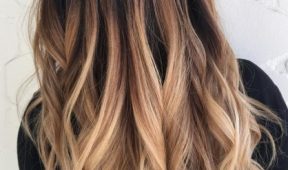
Balayage is more suitable for a longer pixie or pixie bob, where there is already enough length for a soft transition. Balayage colouring can add depth and visually emphasise individual strands.
AirTouch is also more logical to consider for longer versions rather than an ultra-short pixie. The technique involves partial lightening with strands selected using airflow, so whether it can be performed depends on the actual hair length. Read more about AirTouch colouring.
If you are planning a pixie together with noticeable lightening, it is a good idea to consider the haircut and colour as a single look. For example, lighter long bangs can visually emphasise the area intended to be the main focal point.
When to Choose a Pixie
A pixie is worth seriously considering if you want to change the whole principle of your hairstyle rather than simply make your hair shorter. This haircut is a great option when:
- you like an open face and neck;
- you want a defined shape without lengthy styling;
- you are ready to maintain the haircut regularly;
- you like changing your look through texture and bangs rather than length;
- you want to make natural waves or hair density part of the shape;
- you have been wearing long hair out of habit rather than because you genuinely like it.
However, if your main requirement is to be able to tie your hair into a ponytail every day, it may be better to consider a longer bob or another shape. A pixie offers a different kind of freedom: less length but more emphasis on lines, texture, and facial features.
There is another practical point. You should not ask your stylist simply to reproduce a photograph. At PIED-DE-POULE, the expected result is discussed before the work begins: shape, length, bangs, and styling details. This approach is especially important with short haircuts, where even one or two centimetres can significantly change the result. It reflects the brand’s principle of first understanding the request and agreeing on the desired result before carrying out the service.
You can explore other PIED-DE-POULE hairdressing services on the salon’s website: from haircuts and styling to colouring and professional hair care.